
Start With the Work You Measure Every Day
Before you choose a granite plate, list the parts you actually inspect. A plate for small machined components in Edenvale will not need the same footprint as one used for long fabricated assemblies in Jet Park. Measure the largest part, then add clear working space for clamps, gauges and safe hand movement.
As a rule, the plate should be large enough for the biggest workpiece to sit fully on the usable area with a margin of at least 150 mm to 200 mm on the sides. If you regularly use slip gauges, height gauges or indicators, allow extra space for the operator to move around the job without bumping the edge.
- List the longest and widest parts you inspect.
- Allow room for marking out, not just checking.
- Plan for future work, especially if production may grow.
- Keep walkways clear in busy areas where trolleys pass through.
Match Plate Size to the Application
Small plates are useful for bench checks, toolroom work and tight inspection stations. Larger plates are better for layout work, batch inspection and bigger components. In many Johannesburg workshops, space is limited, so the right size is the one that balances access, accuracy and floor loading. A plate that is too large can be awkward to clean and harder to keep level.
For a compact inspection bench, a plate around 600 x 600 mm or 1000 x 630 mm may be enough. For general workshop use, 1200 x 900 mm or 1500 x 1000 mm gives more flexibility. If you work with long shafts, frames or panels, larger formats can help, but make sure the stand and floor can carry the weight. In older factory buildings in Germiston or Boksburg, check the floor condition first.
- Bench work: small to medium plate sizes.
- General inspection: medium plate with good access on 3 sides.
- Layout work: larger plate with space for tools and fixtures.
- Long parts: choose length first, then width and stand height.
Choose the Right Granite Grade and Flatness
Not every plate needs the same tolerance. The grade you choose should suit the level of accuracy required by the work and the measurement tools used on it. A toolroom handling calibration checks needs a tighter flatness class than a fabrication area doing rough layout work. Ask what level of accuracy is needed, not just what size fits the room.
Granite is popular because it resists wear and does not corrode in humid conditions. That matters in coastal work, but even in Gauteng dust and vibration can affect performance if the plate is not cared for. A higher grade may cost more upfront, but it supports better repeatability and less rework over time. If the plate is used with indicators or micrometers, calibration records should stay current.
- Use tighter flatness for calibration and final inspection.
- Use a practical grade for marking out and general checks.
- Ask for a calibration certificate where required.
- Set a recheck interval based on use, not guesswork.
Select a Support Stand That Holds the Load Correctly
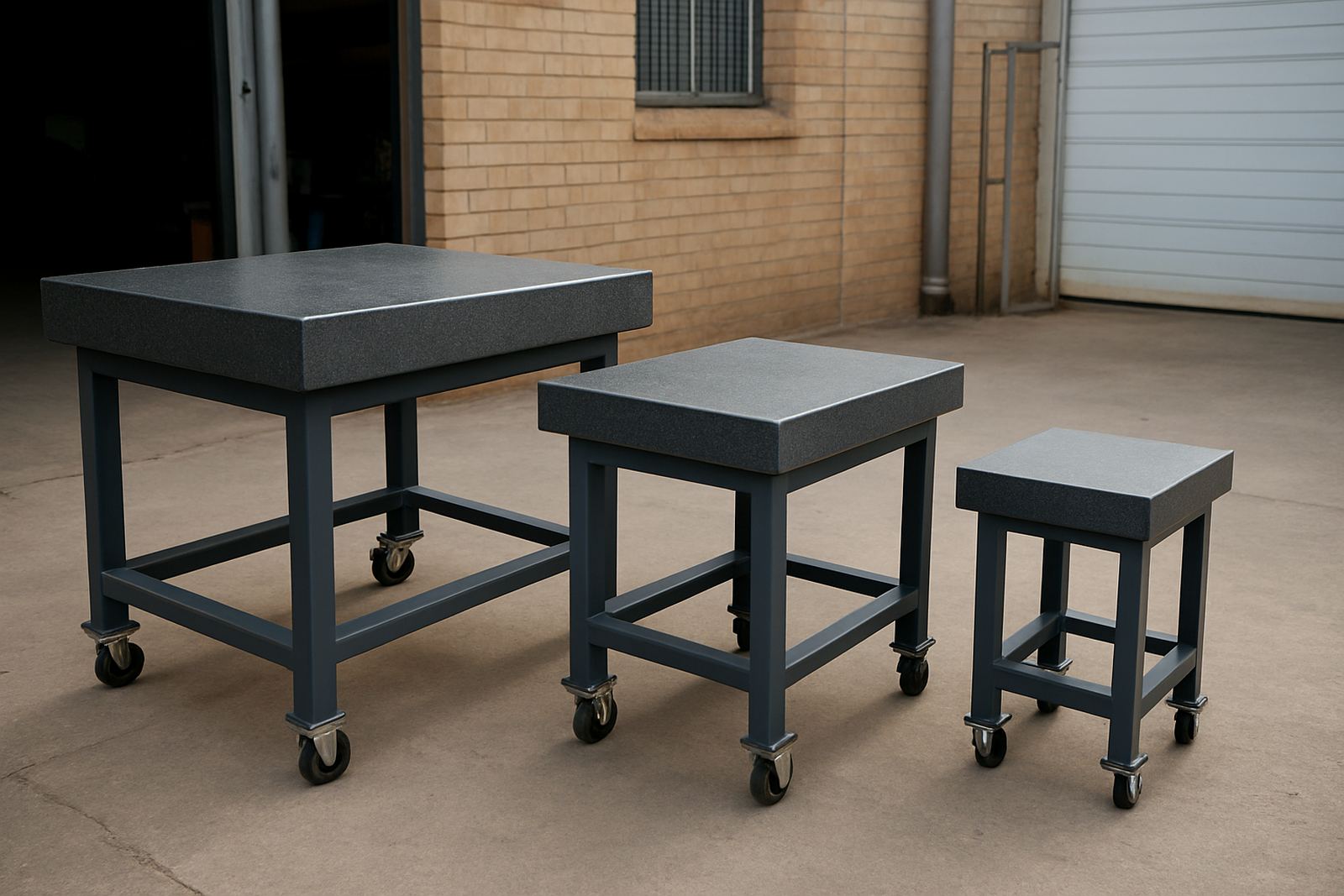
The stand is just as important as the plate. If the support is wrong, the plate can twist and lose accuracy. A proper stand should carry the full weight evenly and keep the plate stable when people lean on it. This is critical for heavier plates, especially where the floor may not be perfectly level.
For granite plates, use a stand designed for the plate size and weight, with adjustable feet for levelling. In plant rooms with vibration from presses or compressors, position the plate away from the source of movement if possible. If the workshop has dim or inconsistent lighting, ensure any measuring equipment can still be used safely and readings are visible at the station.
- Check that the stand is rated for the plate weight.
- Make sure the stand can be levelled after installation.
- Keep the plate clear of machine vibration and traffic routes.
- Allow enough legroom for seated or standing use.
Plan the Layout Around Access, Cleaning and Safety
A surface plate works best when the surrounding area supports careful use. Leave enough space to clean the plate properly, inspect parts from different sides and store tools within easy reach. If the area is cramped, operators tend to place items on the edge and that leads to damage. Good layout matters just as much as the plate itself.
In Isando or Kempton Park workshops, dust and forklift movement can shorten the life of a plate if the area is not controlled. Keep the station away from swarf, cutting fluid overspray and direct sunlight. Use a cover when the plate is not in use and do not place heavy items or random stock on top of it. A clean, dry plate gives more reliable readings and lasts longer.
- Leave a clear walkway around the plate.
- Provide a cover or protective sheet for idle periods.
- Keep abrasive dust and oil off the surface.
- Store gauges and accessories close by but not on the plate.
Use This Final Buying Checklist Before You Order
When you are ready to choose, work through the basics carefully. The right plate should suit the parts, the room and the type of inspection. A short checklist helps avoid buying a plate that is too small, too heavy or not accurate enough for the job. It also helps when you need to explain the requirement to management or procurement.
For many South African sites, courier delivery is straightforward, but installation needs planning. Measure door widths, corridor turns and floor access before the plate arrives. If the plate is going upstairs or into a mezzanine area, confirm the lifting method in advance. A rushed setup can crack corners or cause an uneven install.
- What is the biggest part you will inspect?
- What flatness grade do you actually need?
- Will the stand handle the weight and size?
- Is the floor sound, level and vibration free?
- Is there enough space for cleaning and access?
- Do you need calibration support and regular checks?