
Start With The Jobs The Metre Must Handle
Before comparing specifications, list the work the metre will see every week. A technician in Isando may use it for motor faults, control panels, battery checks, or sensor testing, while a maintenance team in Germiston may need a metre that copes with quick fault finding on rotating equipment and distribution boards. The best choice depends on the tasks, not only the price tag.
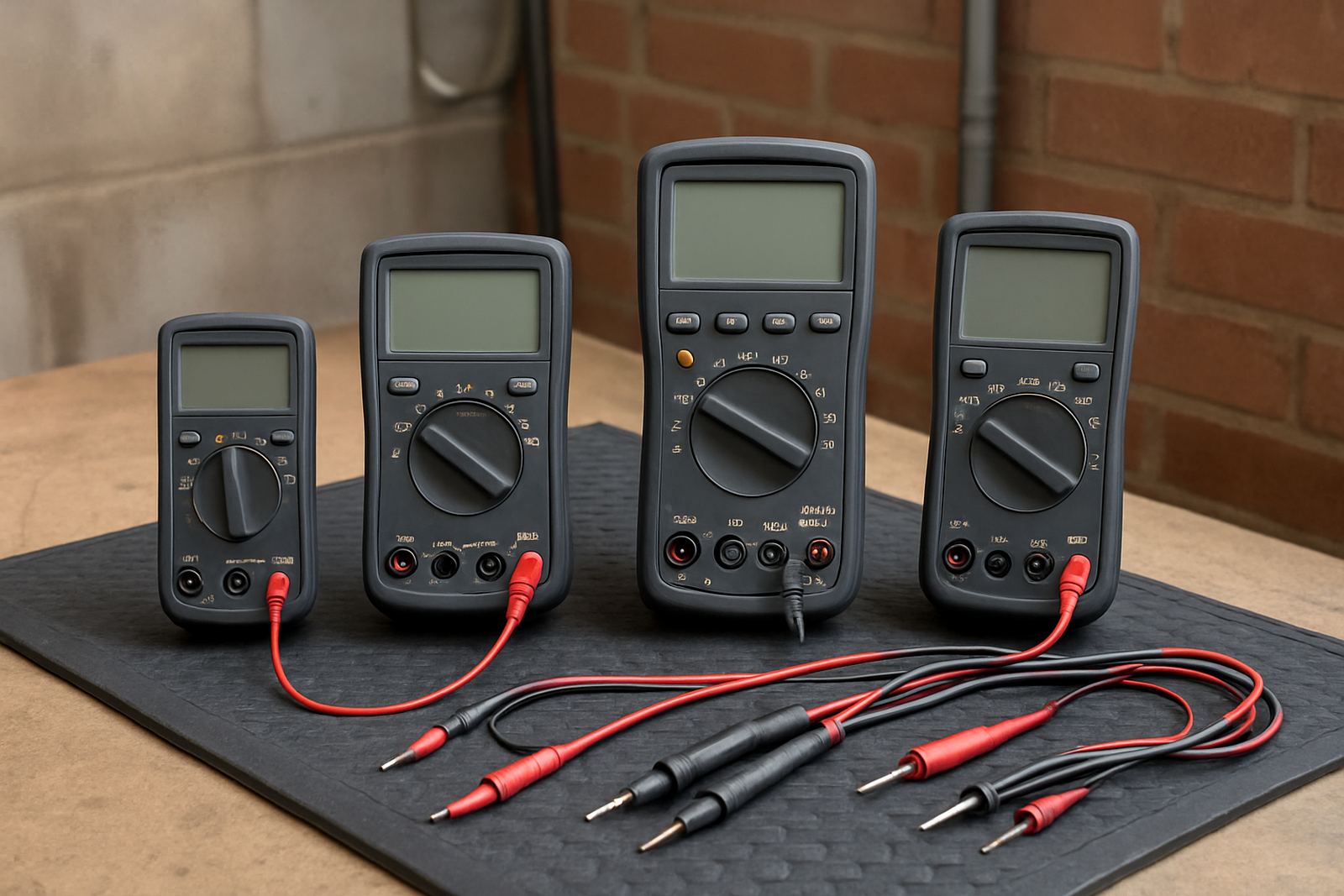
For general maintenance, a good digital multimeter should cover voltage, current, resistance, continuity and diode testing. If your team also works on automation or electronics, look for capacitance, frequency, temperature and duty cycle functions. That saves time when diagnosing PLC inputs, control signals, and small power supplies. A clear display is also important, especially in dim plant rooms or during after-hours callouts.
- List the equipment your team tests most often.
- Note the highest voltage and current levels involved.
- Check if any jobs need temperature, frequency, or capacitance reading.
- Decide whether the metre must suit workshop use, field use, or both.
Check Safety Rating And Input Protection
Safety is where many buyers go wrong. A metre used on industrial sites must be suitable for the environment and the circuit category. If your staff work near switchboards, VSDs, motors, and outdoor feeders, the metre should have proper overload protection and a category rating that matches the work. Do not choose by voltage range alone. The real issue is whether the metre can handle transients and faults without putting the user at risk.
Ask for the category rating, fuse protection, and whether the test leads are rated for the same level. In coastal areas near Durban or along the Eastern Cape, moisture and corrosion can also affect connectors, so a metre with good lead quality and sealed construction is worth considering. In dusty workshops around Boksburg or Jet Park, a tough casing and solid rotary switch help the unit last longer.
- Confirm the category rating for your application.
- Check for fused current inputs and protected terminals.
- Inspect the quality of probes, clips, and lead insulation.
- Look for a case that suits dusty, oily, or humid conditions.
Accuracy, Resolution And Range Matter More Than Fancy Features
Not every job needs the same level of precision. For routine maintenance, a standard digital multimeter may be enough, but if you are verifying control signals, testing instrumentation or matching values between sites, accuracy becomes important. Look at the basic accuracy statement for DC voltage and resistance, then compare the resolution. A metre that only gives broad readings can leave you guessing when a fault is small.
Range selection is another point to check. Auto-ranging is helpful for busy technicians because it reduces setup time, but manual ranging can be useful when a user wants faster repeat readings. Some teams prefer both. The display should also be easy to read in low light and from a short distance, especially when working in plant rooms or under machinery where access is tight.
Do not overlook response speed. A slow metre can make intermittent faults harder to catch. If your team works on conveyor drives, pumps, or panels that vary during operation, choose a metre that reacts quickly and holds readings reliably. Small details like backlight, bar graph response and audible continuity tone make daily use easier, no fuss.
Think About Workplace Conditions And Power Supply
Industrial buyers should match the metre to the site conditions, not just the spec sheet. If the tool will be used on forklifts, generators, compressors or remote plant, it needs a strong battery life and simple power management. On busy shifts where tasks change quickly, a metre that starts up fast and conserves battery is a practical choice. A low battery warning is useful, but a backlit display and auto shut-off help too.
Consider the physical build as well. A slip resistant body, clear button layout and a stand or magnetic hanger can save time on ladders, in cabinets or inside tight plant spaces. For field service work around Midrand, Edenvale or Kempton Park, a compact metre in a protective pouch is easier to carry than a larger bench-style unit. If the site is damp, oily or exposed to temperature swings, choose a metre with a case that resists grime and condensation.
Calibration Should Be Part Of The Purchase Decision
A multimeter is only useful if its readings remain trustworthy. That is why calibration matters from the first day of service. For companies that issue metres to multiple technicians, keeping each unit traceable to a current calibration record helps with audits, customer reporting and internal quality checks. It also reduces disputes when readings are used to sign off repairs or production work. A metre that drifts can cost far more than the calibration fee.
When buying, ask how often the metre should be calibrated for your use. Some teams need annual checks, while others run a tighter schedule because of heavy use or formal quality systems. If the metre is exposed to vibration, dust or rough handling, more frequent checks may be needed. Keep the serial number, service date and next due date on file, and remove any out-of-date unit from circulation.
At Accu in Isando, we see many metres that still work but no longer read within spec. That gap can be small on paper yet enough to affect maintenance decisions. Calibration keeps the numbers honest and gives your team confidence when the reading needs to be right first time.
A Simple Buyer Checklist Before You Place The Order
Before signing off a purchase, run through a final checklist with the end user and the person responsible for calibration. This helps avoid buying a metre that is over specified for basic work or too limited for the plant. A good check now saves returns later and keeps technicians working with tools that fit the job.
- Does it cover the measurements your team uses most often?
- Is the safety rating suitable for the circuits and panels on site?
- Is the display readable in low light and from a normal working position?
- Will the battery life suit field work and long shifts?
- Can the metre be calibrated and tracked on your maintenance system?
- Are the test leads and accessories suitable for industrial use?
If the answer to any of these is no, keep comparing. A cheaper metre that fails early or gives uncertain readings ends up costing more in downtime, rework and lost confidence.
Getting The Right Support After Purchase
The best multimeter choice is easier when you know who will support it after it arrives. For industrial buyers, that support may include courier collection for calibration, advice on test lead replacement, and help planning a service schedule across several sites. If your team works between Johannesburg, Kempton Park, Edenvale, Germiston, Boksburg, Jet Park and Meadowdale, a local calibration partner can make life simpler.
Accu assists customers across South Africa from our base in Isando, Kempton Park, with courier collection available nationwide. That means your team can keep metres moving through service and back into use with less downtime. For buyers comparing options, the practical question is not only which metre to choose, but also who will keep it accurate over time.