
Start With The Job It Must Handle
Before comparing models, be clear on the measuring tasks in front of you. A height gauge for a workshop checking brackets, machined plates, and setting out features on a surface plate has different needs to one used in a busy inspection room where the same tool is picked up all day. If your team handles short runs, one-off jobs, or incoming inspection, versatility matters. If you are running repeat production checks, speed and repeatability become the priority.
Think about the parts you measure most often. Are they small components under 300 mm, or larger fabricated items that need a longer measuring range? Do you need fine graduations for close tolerance work, or a simpler unit for general setting-out? In many Gauteng workshops, the right answer is not the most expensive gauge, but the one that matches the actual job and can hold its accuracy under real conditions.
- Identify the tallest parts you will measure regularly
- Check whether you need direct reading or fine adjustment
- Match the gauge to the tolerance levels on your drawings
- Consider how often different operators will use it
Compare Accuracy, Resolution, And Repeatability
Accuracy tells you how close the reading is to the true value. Resolution tells you the smallest movement you can see on the scale or display. Repeatability tells you whether the same reading comes back again and again under the same conditions. These three points are not the same, and buyers often focus on only one of them.
For inspection use, resolution alone can be misleading. A gauge might show very fine increments but still drift if the beam is not stable or the base does not sit flat on the plate. If your work includes tool setting, first article checks, or sign-off on machined parts, ask how the gauge behaves over its full range. A sound unit should give steady readings near the bottom and top of the range, not only in the middle.
It is also worth checking whether the gauge is intended for workshop use or higher precision inspection work. A proper calibration record matters when a customer asks for proof, or when your own quality system needs traceability. In many cases the cost of a poorly chosen gauge is not the purchase price, but rework, disputes, and time lost in the calibation room.
Choose The Right Measuring Range And Base Size
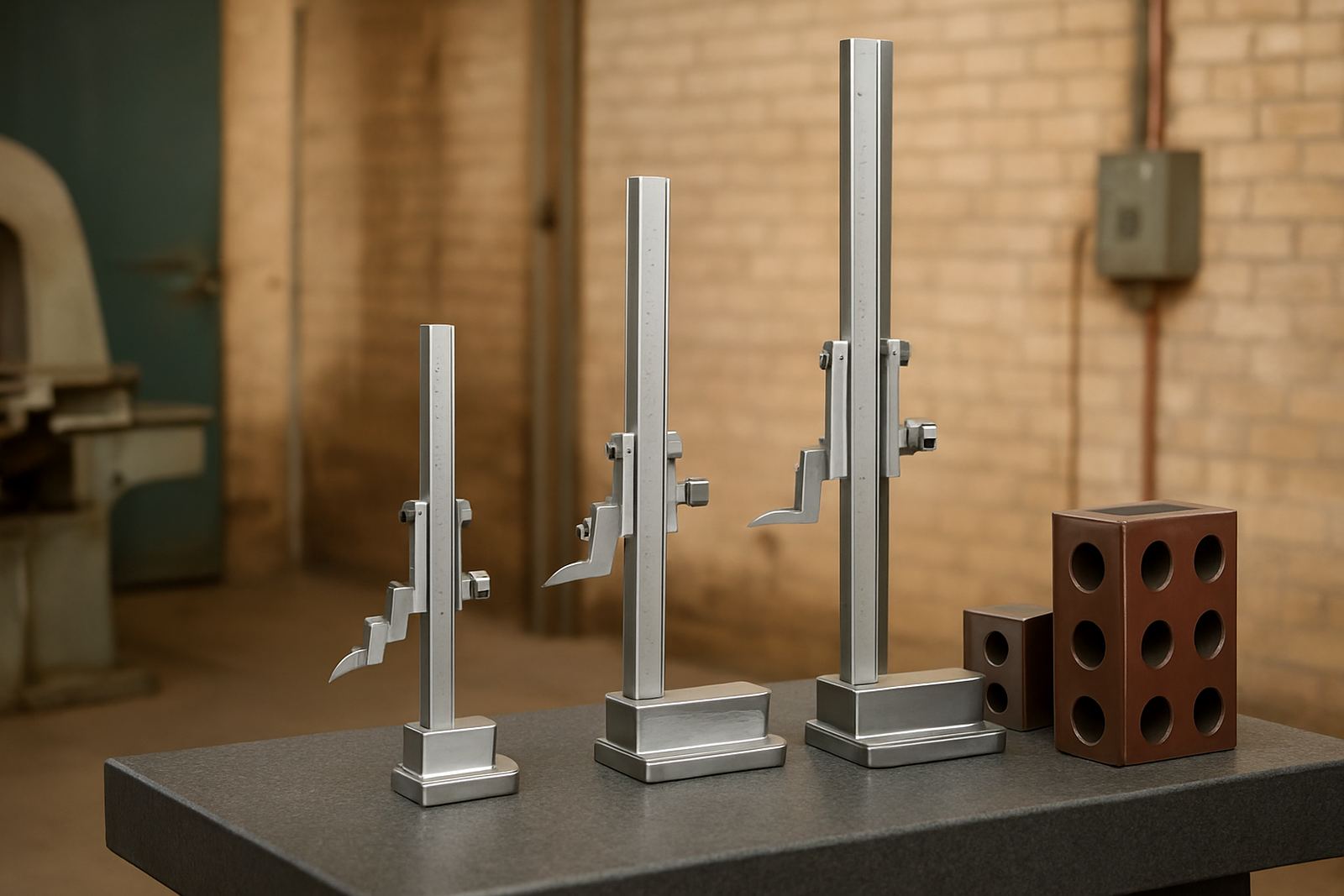
Measuring range should be chosen with some margin, but not too much. A gauge that is far larger than your work can be awkward to handle and may be less convenient for fine tasks. On the other hand, choosing a range that is too short leads to awkward workarounds and limits the jobs the instrument can cover. A practical rule is to choose a range that comfortably covers the biggest parts you measure, with a little space to spare.
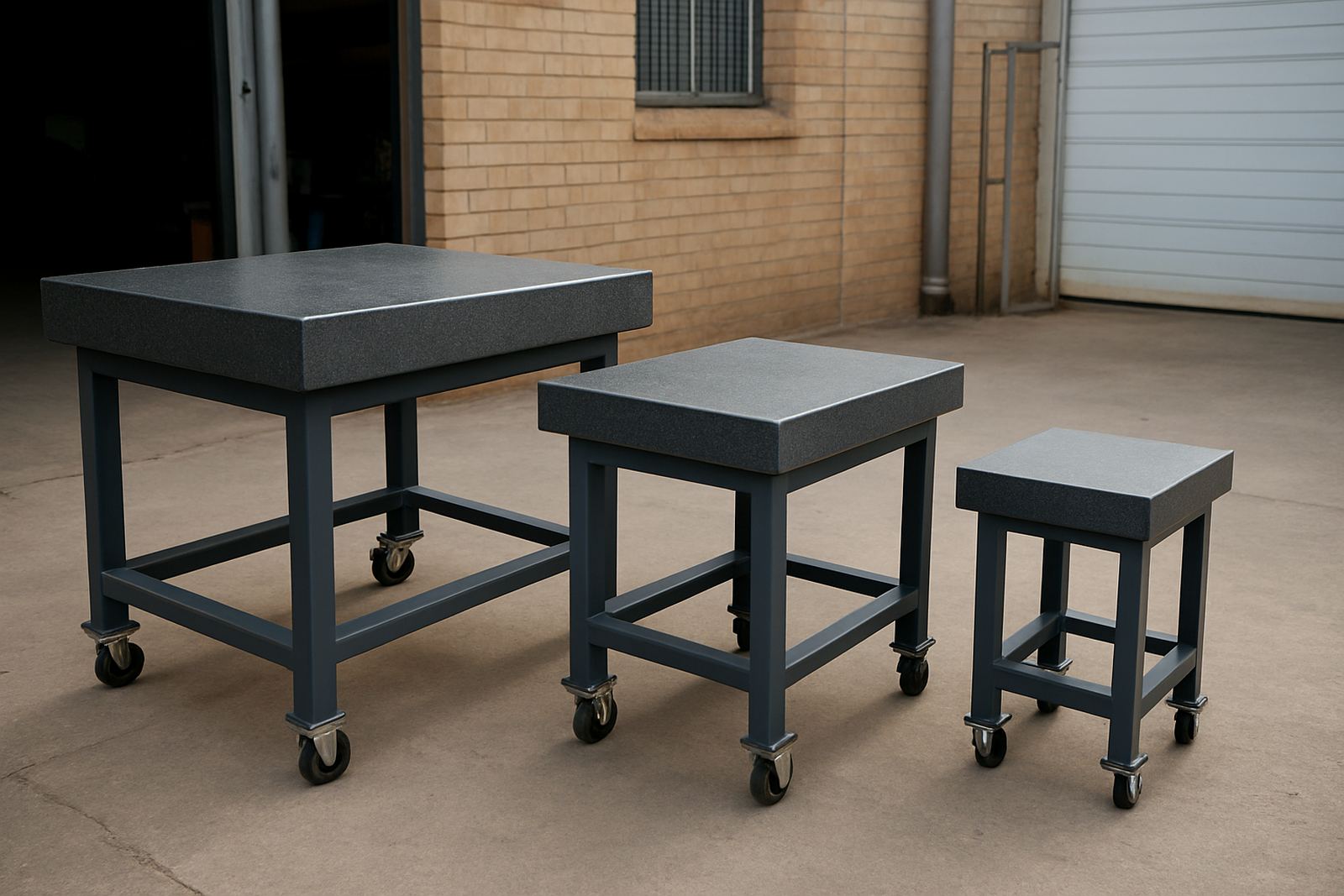
The base size also matters more than many buyers expect. A wider, heavier base gives better stability on a surface plate and helps resist tipping when you move across larger components. This is useful in heavier manufacturing, and in busy Gauteng workshops where parts are handled quickly between stations. If you work on smaller precision parts, a slimmer base may be easier to position, but it should still sit flat and steady.
- Check the maximum part height you need to measure
- Make sure the base suits the surface plate size
- Look for smooth movement without side play
- Confirm the gauge is comfortable to read at eye level
Manual Or Digital: Which Suits Your Team
Manual height gauges are simple, durable, and often well suited to stable workshop routines. They do not rely on batteries and are often easier to keep available for use throughout a busy shift. Digital models are popular where quick reading, data handling, and reduced reading errors are important. They can speed up inspection work, especially where several measurements must be recorded in a short time.
For a team with different skill levels, digital units can reduce operator variation, while manual units may suit technicians who prefer direct control and a simpler setup. If your site is coastal or exposed to humidity, the display, seals, and sliding parts should be checked carefully. Dust, coolant mist and temperature swings can all affect day-to-day use if the instrument is not maintained properly.
Do not choose only on features. Ask how the unit will be stored, who will use it, and how often it will need checking. A digital gauge is only as useful as its battery life and condition, while a manual gauge depends on the condition of the scale and the smoothness of the beam. The better choice is the one your team will use correctly every shift.
Look For Build Quality That Holds Up In Local Conditions
South African workshops can be tough on measuring instruments. Heat, dust, vibration, and moisture all take their toll. A well-built height gauge should move smoothly, lock securely, and hold zero without creep. The carriage should feel consistent through the full travel, and the scriber or probe should mount firmly with no unnecessary play.
Material choice matters too. A strong, stable frame helps the gauge keep its shape over time. If the tool is used near machine coolant or in a humid environment, corrosion resistance becomes important. Even in a clean toolroom, careless handling can damage a delicate instrument, so the fit and finish should make day-to-day use easier not harder.
Think about spares and support as part of the purchase. Can the scriber point be replaced? Are adjustment parts available? Is calibration support accessible from Johannesburg, Kempton Park, or by courier from other parts of the country? These details often decide whether the gauge stays in service for years or becomes a frustration after a few months.
- Check for smooth movement and secure locking
- Inspect the beam, base, and scriber for wear points
- Ask about replacement parts and servicing
- Consider resistance to dust, moisture, and coolant exposure
Build Calibration Into The Purchase Decision
A height gauge should not be bought as a once-off item. It is part of a measurement system, and that means calibration must be part of the plan from the start. If your business supplies engineering, fabrication, or electronics work, your records may need proof that the gauge is checked at regular intervals. This is especially important when customer specifications are tight or when a part is released for further production.
Ask for a calibration schedule that fits your usage. A gauge used daily in a toolroom may need more frequent checks than one used only for periodic verification. If your operation is based in Isando, Edenvale, Germiston, Boksburg, Jet Park, Meadowdale, Midrand, or nearby areas, courier collection can make it easier to keep instruments moving without interrupting production. For sites further afield, collection and return also reduces the risk of mishandling in transit.
The main point is simple: buy the gauge and the service plan together. That way you know what accuracy to expect, when the next check is due, and how the instrument will be supported when records are needed.
Quick Buyer Checklist Before You Place The Order
Before you approve the purchase, walk through a final checklist with the people who will use the gauge. This helps avoid buying a model that looks suitable on paper but does not suit your actual work. A few minutes of checking now can save a lot of time later.
- Does the measuring range cover all expected jobs?
- Is the base stable enough for your surface plate?
- Will manual or digital reading suit the operators?
- Is the resolution appropriate for your tolerance bands?
- Can the gauge be calibrated and supported locally?
- Will storage, handling, and transport protect the instrument?
If you are unsure, compare the models against a real part or drawing from your own workshop. That gives a far better answer than a brochure ever will. For businesses that depend on measurement for quality control, the best height gauge is the one that gives reliable readings, fits the workflow, and can be supported properly over time.