
What thread gauges do on the shop floor
Thread gauges give a quick yes or no answer on threaded parts. Instead of measuring a profile with several tools, operators can check whether a nut, boss, stud or tapped hole matches the required thread form and pitch. That makes them useful where repeatability matters, especially in Gauteng factories where production can run long shifts and every minute counts.
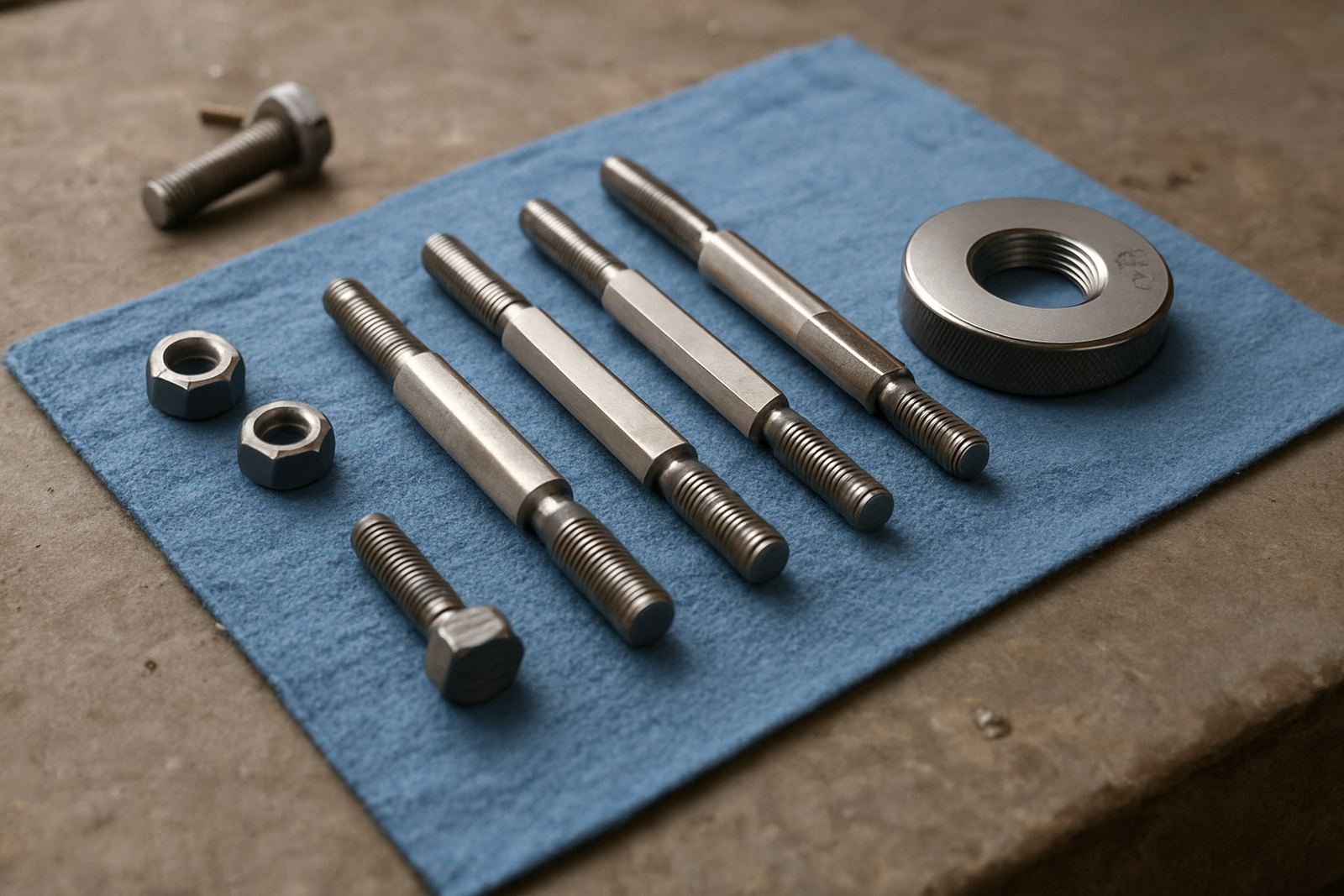
In practical terms, a thread gauge is used to verify that a part will assemble correctly with its mating component. For internal threads, the plug-style gauge checks the female thread. For external threads, the ring-style gauge checks the male thread. On a busy line, this is often the fastest way to catch wear on taps, dies or machining setups before batches go out the door.
Thread gauges are not only for large plants. Small machine shops in Isando, Kempton Park, Edenvale and Boksburg use them for incoming material checks, in-process control and final inspection. They are also common where parts must comply with customer drawings, municipal contract work or repeat supply requirements, especially when there is pressure to keep tolerances tight.
- Go gauge confirms the thread is within acceptable form and size
- No-go gauge confirms the thread does not run beyond the permitted limit
- Suitable for production checks, inspection rooms and toolroom use
- Helps reduce rejects caused by worn tooling or incorrect setup
Thread gauge types, sizes and options
Thread gauges are supplied in several forms depending on the thread being checked. The most common are metric ISO thread gauges, but options can also cover unified and other thread forms used in engineering, maintenance and fabrication work. Selection depends on the thread standard, pitch, diameter and whether you are checking internal or external threads.
Sizes are usually specified by nominal diameter and pitch, for example M6 x 1.0, M10 x 1.5, or M24 x 3.0. Fine pitch and coarse pitch threads may need different gauges, so it is important to order against the exact drawing or sample part. We also supply gauges for small precision work and larger industrial sizes used on heavy equipment, manifolds and structural components.
Some jobs call for a single go gauge only, while others require a paired go and no-go set. For production control, paired gauges are the safer choice because they show both pass and reject limits. If you are checking a batch after retooling or after maintenance, a full set is worth having on hand. It saves time when a line is restarted after machine downtime or process interruptions, as instruments can be checked and set up again efficiently.
- Metric thread gauges for common engineering sizes
- Go and no-go sets for full limit checking
- Internal plug styles for tapped holes
- External ring styles for studs, shafts and threaded pins
- Custom selections matched to drawing notes or sample parts
Where thread gauges work best in production
Thread gauges suit any environment where threaded components are made, assembled or inspected. In Johannesburg industrial areas such as Jet Park, Meadowdale, Germiston and Midrand, they are used in machining, metal fabrication, automotive support, equipment repair and general manufacturing. They are also practical for electronics enclosures and instrument assembly where threaded inserts and fixing points must fit properly.
These gauges are especially useful where parts are produced in quantity. A quick check at the machine can show when a tool is drifting out of spec, which lets the operator correct the issue before too many parts are made. That matters on shifts where one machine is running multiple jobs and there is little room for trial and error.
They are also helpful in receiving inspection. If a supplier sends threaded parts from outside Gauteng or from a coastal area where humidity can affect storage, a gauge check can confirm whether the thread is still clean and usable. Thread condition matters, and a light burr or plating build-up can change the feel of the fit even when the part looks fine.
- Machining and turning workshops
- Fabrication and maintenance departments
- Quality control rooms and receiving bays
- Assembly lines for components with threaded fixings
- Repair shops that need quick fit checks before release
Power, installation and site requirements
Thread gauges are manual instruments, so they do not need power, gas or compressed air. There is no installation process beyond proper storage and correct handling. That makes them ideal for workshops that deal with intermittent power supply, generator changeovers or temporary work areas during plant maintenance.
What they do need is a clean environment and a steady routine. Keep them away from grinding dust, swarf, oil mist and heavy knocks. If gauges are left on a bench near cutting coolant or in an open container, accuracy can suffer over time. On coastal jobs, moisture can also cause surface wear or corrosion if the gauges are not wiped down and stored properly.
For businesses with multiple sites, a central issue register is helpful. It allows teams in Isando, Edenvale or Boksburg to know which gauge set is in use, which one is due for verification, and which size is missing. That avoids confusion when the same thread size is checked across several shifts or departments.
Care, servicing and calibration support
Although thread gauges are simple tools, they still need attention. Threads wear slowly over time and contamination can affect the feel of the fit. A good maintenance routine includes cleaning after use, checking for damage on the lead in chamfer and confirming that the gauge still moves as intended on the correct sample part. Do not force a gauge onto a part, if it does not seat properly, stop and inspect the thread.
Accu supports calibration services for measurement tools used in industrial environments. Where thread gauges are part of your quality system, regular verification helps keep results trustworthy and consistent. This is particularly important for businesses working to internal quality procedures, customer audits or ISO-based controls. A gauge that is out of spec can create a chain of rejects that affects more than one department.
For tools used daily, a practical schedule is often better than waiting until a problem appears. High-use gauges in production should be checked more often than tools kept for occasional audit work. If your operation runs across multiple areas or uses courier collection nationwide, it helps to keep gauge sets labelled and packed separately so they do not get mixed up with other instruments.
- Clean after use and store dry
- Inspect for wear, nicks and contamination
- Keep sets matched to the correct thread standard
- Verify gauges at regular intervals based on use
- Track each gauge by size and department
What to check when ordering thread gauges
Before placing an order, confirm the exact thread standard from the drawing or existing component. The most common mistake is assuming the nominal size is enough. Pitch, tolerance class and thread form all matter. If you are checking imported parts or older machinery, bring the sample part or an accurate drawing so the right gauge can be matched from the start.
It also helps to specify whether you need internal or external thread checking, and whether the requirement is go only or go and no-go. If the gauges will be used on-site in a workshop with oily hands or fluctuating temperatures, ask for storage that keeps them protected between checks. A small oversight at ordering stage can cause delays later on, especially when a line is waiting on a part to pass inspection.
When you contact Accu through the enquiry form, include the thread size, pitch, type of thread, quantity needed and whether calibration documentation is required for your records. If you are ordering for teams in Kempton Park, Germiston or Midrand, we can help align the right gauge selection with your production and inspection process. That way the tool is suitable from day one, not after a costly recheck.
- Nominal size and exact pitch
- Internal or external thread type
- Go only or go and no-go requirement
- Thread standard and tolerance class
- Quantity and whether documentation is needed
A practical fit for South African workshops
Thread gauges are one of the simplest ways to keep threaded parts under control, yet they carry real value in day to day production. They are quick to use, easy to store and suited to busy South African workshops that need reliable checks without slowing the line. From small repair teams to larger manufacturers in the East Rand, they help reduce guesswork and keep work moving.
If your operation depends on threaded parts fitting first time, the right gauge set is worth having in the cupboard. It supports better process control, less rework and cleaner handover between production, inspection and assembly. For sites dealing with power interruptions or tight delivery schedules, that sort of certainty matters more than people sometimes expect.
Key facts
| Thread types | Metric ISO, unified and other engineering thread forms on request |
|---|---|
| Gauge styles | Go gauge, no-go gauge, plug gauges and ring gauges |
| Typical sizes | From small precision threads up to larger industrial diameters |
| Use environment | Workshop, inspection room, toolroom and receiving bay |
| Power or gas need | None, manual inspection tool |
| Support | Calibration services and courier collection nationwide |