
What Industrial Thermometers Do On Site
Industrial thermometers are used to check temperatures in technical and production environments where ordinary household instruments are not suitable. In a plant, workshop, cold room or maintenance bay, they help confirm whether a machine is running within spec, a room is staying within tolerance, or a process line is ready for the next stage. That matters when product quality, worker safety or equipment life depends on the reading.
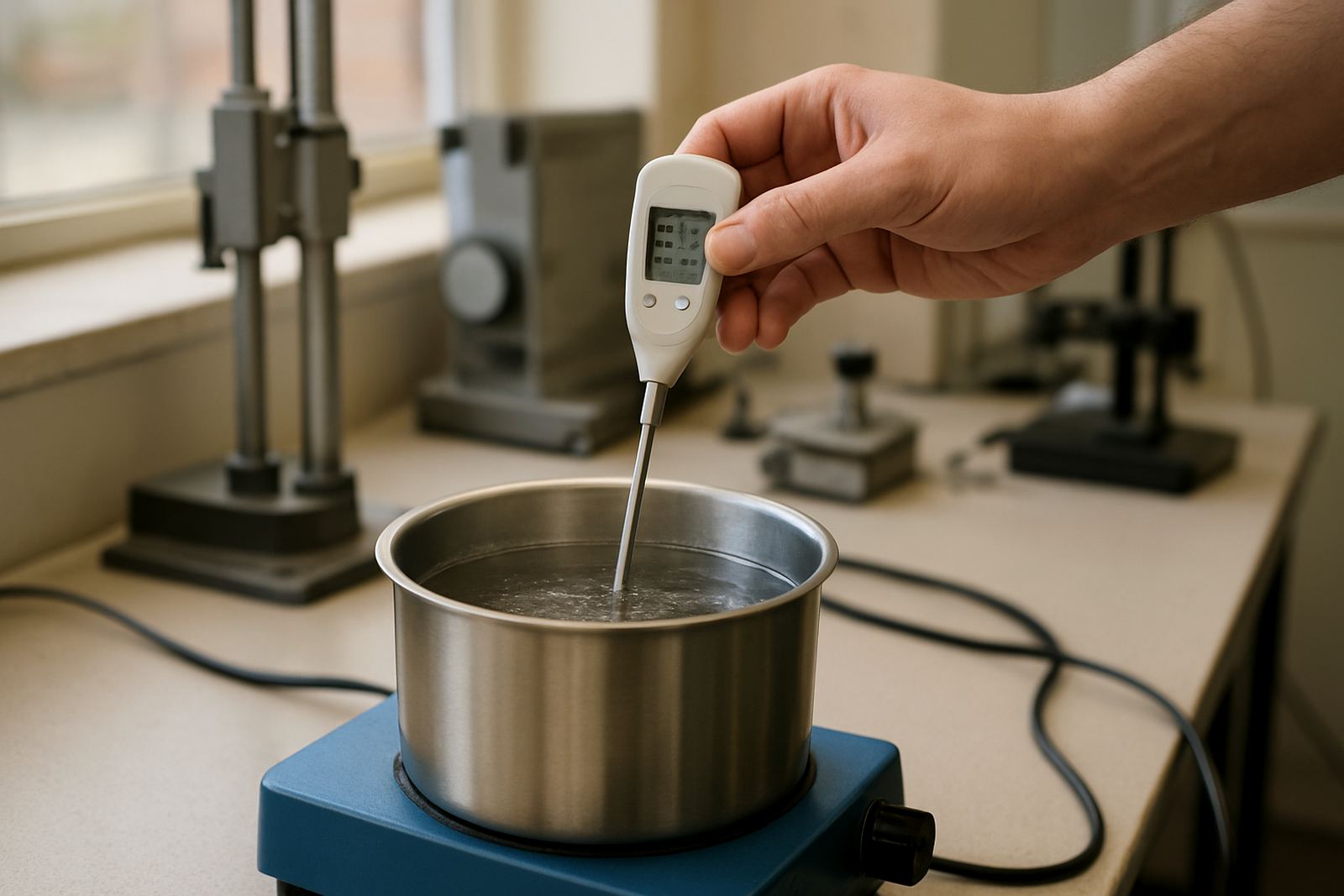
These thermometers are chosen for repeatable readings, steady performance and build quality that can handle daily use. Depending on the application, the instrument may be a probe type, a dial unit, a digital handheld model or a fixed-point thermometer. Some units are used for spot checks, while others remain in place for continuous monitoring. For South African sites, especially in Durban or humid storage areas in Gauteng, a thermometer should remain easy to read and reliable even in challenging conditions.
We work with clients who need dependable temperature checking for engineering, manufacturing, HVAC, food handling, electrical maintenance and general process control. If the reading is off by even a few degrees, you can end up with rejected stock, wasted energy or equipment running harder than it should. That is why temperature checking is not just a box-ticking exercise, its part of day-to-day control.
Common Sizes, Styles And Measuring Ranges
Industrial thermometers come in a range of sizes and formats so you can match the instrument to the job. Small handheld units are practical for maintenance teams moving between sites in Isando, Germiston or Boksburg. Larger dial or panel units suit fixed installations such as ovens, tanks, ducts and plant rooms. Probe lengths vary widely, from short immersion probes to longer stems for deeper vessels or equipment housings.
Typical options include narrow-range units for ambient checks, wider-range models for machinery, and higher-temperature instruments for process work. If you need to monitor refrigeration, storage or a laboratory area, a thermometer with a tighter low-end range is usually better. For boilers, heaters or drying equipment, you will want a broader high-end range and a probe that can cope with repeated exposure.
- Handheld digital thermometers for quick spot checks and portable use
- Dial thermometers for fixed position or visual checking at a glance
- Probe thermometers for liquids, surfaces, air ducts and equipment housings
- Panel or mounted thermometers for cabinets, enclosures and plant rooms
- Special range models for low temperature, high temperature or general service
It is also worth looking at the display size and mounting style. If your team works in dim areas, around bright sunlight, or in noisy spaces where checks must be done fast, a clear display and simple scale make a real difference.
Where They Suit Best In South African Industry
Industrial thermometers are used in many settings across Johannesburg and beyond. In manufacturing, they are useful for checking ovens, moulding equipment, drying rooms and coolant systems. In HVAC and building maintenance, they help confirm supply air, return air and room conditions. In warehouses and cold storage, they assist with stock control and compliance. On electrical sites, they can be used to monitor panels, enclosures and overheating components during inspections.
They also suit technical teams that do service work across multiple sites, especially where equipment is spread over industrial parks in Kempton Park, Meadowdale or Midrand. A good thermometer lets your crew verify temperatures before a fault becomes a shutdown. In food related environments, consistent temperature checks support hygiene and stock rotation, while in general engineering they help with process verification and fault finding.
For coastal or high moisture areas, choose a model that resists corrosion and can be wiped down after use. In dusty workshops, sealed housings and easy-clean surfaces are worth having. On outdoor jobs, visibility matters, as does a unit that can be handled with gloves on. One size does not fit every site, so it helps to match the thermometer to the actual working conditions rather than buying on price alone.
Installation, Power Needs And Site Setup
Some industrial thermometers are ready to use straight out of the case, while others need mounting or integration into a control point. If the unit is fixed, check the panel cut-out, stem length, thread size or mounting bracket before ordering. For duct work or process lines, the probe must reach the correct depth without contacting moving parts or creating a leak point. On tanks and vessels, insertion depth and sealing method matter just as much as the reading itself.
Digital units may need battery power, mains power or connection to a monitoring system. If your site often needs quick checks in the field, battery-backed models are practical for temporary inspection work. Where continuous monitoring is required, make sure the power source is stable and the cable run is suitable for the environment. If there are washdown areas, heat, vibration or electromagnetic noise from motors and drives, confirm that the thermometer is rated for that setting before installation.
- Check the mounting method, threaded fitting, clamp, bracket or panel cut-out
- Confirm probe length, insertion depth and sensor contact point
- Verify power needs, battery, mains or system connection
- Consider cable length for hard-to-reach plant points
- Ask whether the display remains readable in low light or outdoor sun
In many sites, the easiest setup is the one that can be removed for cleaning or calibration without disrupting production. That saves time when service intervals come around.
Care, Calibration And Ongoing Servicing
Like any measuring instrument, an industrial thermometer needs care if you want accurate results. Keep the sensing point clean, avoid bending probe stems and store the unit where it will not be knocked around in transit. A hard drop can shift the reading, even if the outside still looks fine. In busy maintenance bags, a protective case is a smart idea.
Calibration is important when temperatures affect product quality, compliance or equipment settings. Over time, readings can drift because of wear, vibration, heat cycles or contamination. If your thermometer is used in a critical process, send it in for checking at planned intervals, especially after impact, repairs or a failed audit. Our calibration services support consistent measurement for teams that need evidence they can trust.
Field teams should also watch for signs of trouble, such as slow response, unstable readings, cracked displays, moisture inside the casing or a probe that no longer reacts as expected. If that happens, take the instrument out of service rather than guessing. A small error today can become a costly fault tomorrow.
What To Confirm Before You Order
Choosing the right industrial thermometer starts with the application. A process line, room check and surface inspection do not call for the same tool. Before you place an order, it helps to confirm the measurement range, probe type, installation method and whether the unit must be portable or fixed in place. That way the instrument arrives ready for the job, not half suited to it.
Also check the accuracy requirement. Some sites need only a general indication, while others need tighter tolerance for compliance or quality records. If the thermometer will be used in a wet, dusty or corrosive area, specify that upfront so the right materials and protection level can be selected. For clients collecting through our Johannesburg base or arranging courier collection nationwide, clear order details help us process the request faster and with fewer back and forth calls.
- Temperature range needed for your process or environment
- Accuracy and resolution required for daily use or audits
- Probe length, stem style or mounting size
- Power source, battery, mains or connected system
- Site conditions, heat, moisture, dust, vibration or outdoor use
If you are unsure, tell us what you are measuring and where the instrument will sit. We can help you narrow it down to a suitable option for your site in Isando, Kempton Park, Edenvale, Germiston, Boksburg, Jet Park or Midrand, without overcomplicating the specification.
Key facts
| Product type | Industrial thermometer for process, ambient and equipment temperature checks |
|---|---|
| Typical formats | Handheld, probe, dial, panel mounted and fixed installation units |
| Measurement range | Available in low, general and high temperature ranges depending on application |
| Accuracy | Model dependent, selected to suit general monitoring or tighter control work |
| Power options | Battery, mains or system connected depending on unit type |
| Service support | Calibration checking and courier collection available nationwide from Isando, Kempton Park |