
Tachometers for practical speed checks on rotating plant
A tachometer is used to measure rotational speed, usually in revolutions per minute, on moving equipment where process control, maintenance or fault finding depends on accurate readings. In workshops, factories and service teams it is the quick check that tells you whether a motor is running within spec, whether a fan is under-speeding, or whether a drive issue is affecting output. For many South African sites, having a reliable tachometer on hand helps confirm a machine's actual speed regardless of what the system indicates.
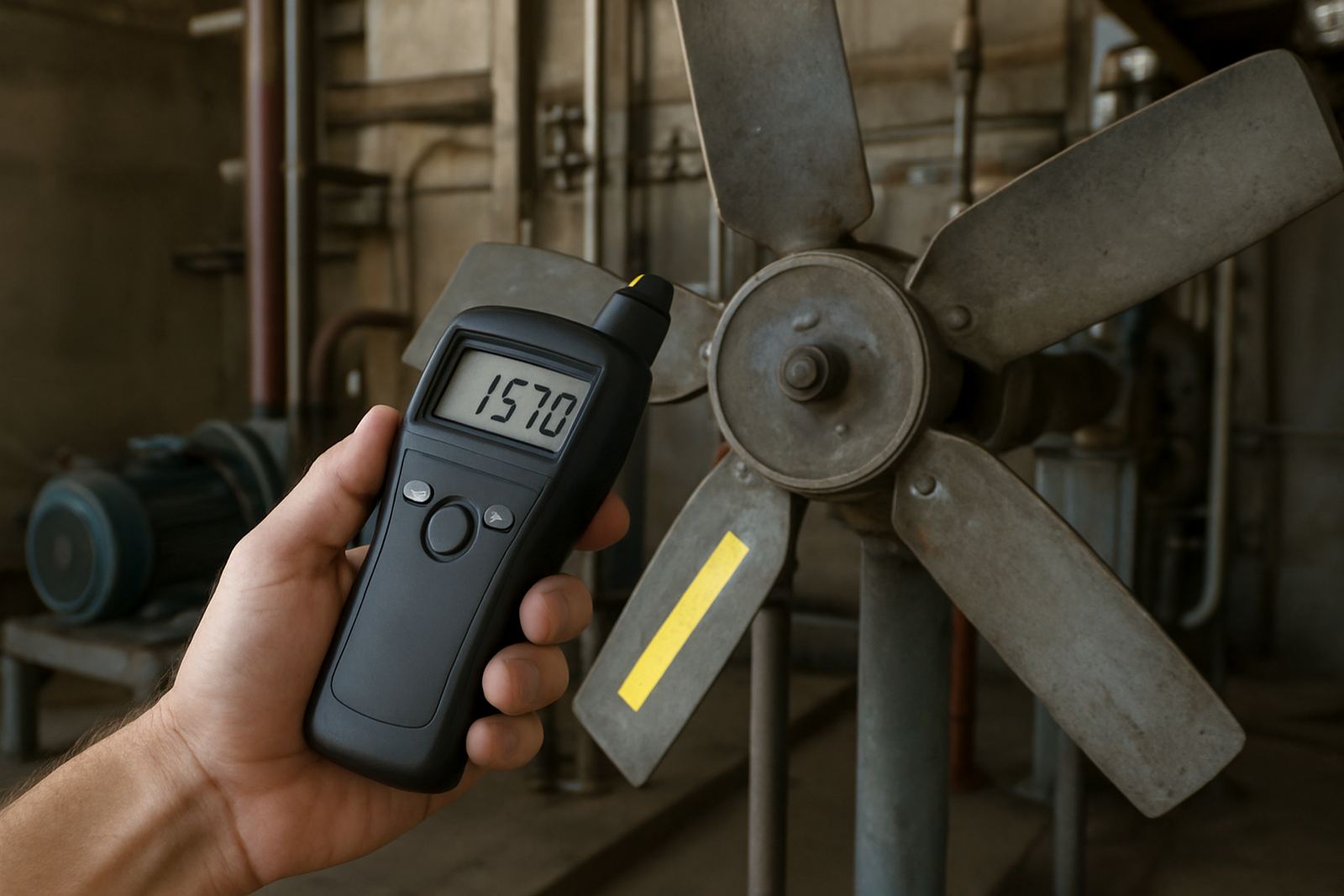
We supply tachometers suited to both contact and non-contact measurement. Contact models use a wheel or tip against the rotating surface, while non-contact units use a reflective target and optical pickup. Each option has its place. Contact testing works well on exposed shafts and rollers, while non-contact measurement is preferred where access is limited, the surface is delicate, or the operator needs to keep a safe distance from moving parts.
- Typical measuring range: 2.5 RPM to 99 999 RPM depending on model
- Display: large LCD for indoor and plant use
- Measurement modes: RPM, surface speed and total count on selected units
- Accuracy: typically ±0.05% to ±0.1% of reading
Contact or non-contact, which type suits the job
The right tachometer depends on how the machine is built and how often readings are taken. On conveyors, lathe spindles, pumps and test benches, non-contact units save time because the operator only needs line of sight and a reflective strip. On older machines, or where the rotating part is accessible and slow enough for safe contact, a mechanical tip or wheel gives dependable readings without needing reflective tape. That matters on site in places like Germiston, Boksburg and Jet Park where maintenance teams often work across mixed equipment ages.
For production teams, the non-contact option is usually the first choice because it reduces wear and speeds up checks. For field service work, a combined model that supports both methods can be useful when site conditions vary. If you are checking small shafts, ventilation systems or packaging lines, also consider whether you need a long-range optical sensor or a compact handheld unit for tight spaces.
- Handheld units for general maintenance and service work
- Contact kits for direct shaft or wheel measurements
- Optical units for safe distance measurement on moving parts
- Dual-function models for teams that handle varied equipment
Where tachometers fit in industry and maintenance
Tachometers are widely used in engineering, manufacturing, packaging, mining support, HVAC, printing and electronics assembly. In Johannesburg and the East Rand, they are often used by technicians checking motor speed before and after repairs, confirming gearbox performance, or matching equipment speed to a process requirement. On fans and blowers, speed checks can reveal blocked filters, worn bearings or slipping belts before the problem turns into downtime.
They also suit balancing work, commissioning and troubleshooting. If a machine is running hot or drawing too much current, a speed reading can show whether the issue is mechanical or electrical. In small plants, a tachometer helps confirm that a repaired drive is back within operating range. It is a simple tool but it saves time, and in many cases it helps avoid unnecessary strip-downs.
- Motors and drive shafts
- Fans, blowers and extraction units
- Pumps, rollers and conveyors
- Machine tools, mixers and test rigs
Installation, power needs and site use
Most handheld tachometers are self-powered and run on batteries, so there is no gas or compressed air requirement for the instrument itself. That makes them suitable for mobile technicians, shutdown crews and service teams travelling between Isando, Edenvale, Midrand and wider Gauteng sites. On fixed installations, some systems may be mounted for continuous monitoring, but the portable units remain the most common choice for routine checks.
When using a non-contact tachometer, the machine surface must accept reflective tape or a suitable marker point. For contact models, the tip or wheel must match the surface and speed range. The operator should also consider ambient light, vibration and access. On outdoor plant or in hot factories, display visibility matters. In coastal humidity or dusty areas, storage and cleaning become more important so the readings stay stable over time.
- Battery powered on most handheld models
- Reflective tape required for optical readings
- No air or gas supply needed for normal use
- Suitable for workshop and field conditions
Care, servicing and calibration support
Like any precision instrument, a tachometer should be checked regularly if it is used for production sign-off, quality control or maintenance decisions. Keep the sensor lens clean, inspect contact tips and wheels for wear, and store the unit away from moisture, oil and impact. If a unit is dropped or exposed to heavy vibration, it should be checked before returning to service. In workshops with dust or conductive residue, especially around electronics or grinding areas, regular cleaning will help extend service life.
Accu supports calibration through our Isando calibration lab, with courier collection available nationwide. That is useful for teams that need traceable verification without sending staff off-site. If your site works to internal quality procedures or client audit requirements, keep a record of serial number, model, service interval and the exact measurement range used. Candice Jacobs in quality assurance and Bertus Swanepoel in calibration help keep the process tight and practical.
- Clean optical surfaces with a soft lint-free cloth
- Check batteries before critical work
- Replace worn contact tips and wheels early
- Send units for calibration at scheduled intervals
What to check before you order
Before ordering a tachometer, think about the equipment you are measuring, the speed range required, and whether the team needs contact, non-contact or both. Also check if the application needs direct RPM only, or a second function such as total count or surface speed. For plants with multiple machine types, a dual-mode unit often gives the best value because it covers more jobs with one instrument.
It helps to confirm the measurement distance, the size of the target area, and whether reflective tape can be applied without affecting the process. If the tachometer will be used in a noisy maintenance environment, a clear display and simple controls are worth having. For teams working across Kempton Park, Boksburg and Meadowdale, a rugged carry case and a stable battery supply are practical considerations too. If the unit will be used by more than one technician, standardising the model makes training easier and reduces mistakes.
Our team can help you match the right tachometer to the job, whether it is for a single workshop or a multi-site operation. Lebohang Motaung and the Accu team work with engineers, technicians and maintenance supervisors who need accurate readings and straightforward support, without fuss.
- Required speed range and accuracy
- Contact only, non-contact only, or dual function
- Need for RPM, surface speed or total count
- Storage case, spare tips and battery requirements
Ordering through Accu in Johannesburg and beyond
Accu is based in Isando, Kempton Park and supports clients across Johannesburg, the East Rand and nationwide. We work with engineers, manufacturers and technicians who need dependable measuring instruments backed by calibration support. If you are replacing a worn unit, setting up a maintenance kit or standardising equipment across sites, we can assist with product selection and courier collection where needed.
Clients reach us through the enquiry form on our contact page, and our team will take it from there. Whether your operation is in Isando, Germiston, Edenvale, Jet Park, Midrand or Boksburg, you can arrange supply and service without unnecessary delay. For temperature, humidity and electrical measurement teams as well, keeping your instruments verified helps reduce disputes and keeps reports clean.
Key facts
| Measurement type | Contact and non-contact rotational speed |
|---|---|
| Typical range | 2.5 RPM to 99 999 RPM |
| Accuracy | ±0.05% to ±0.1% of reading |
| Display | Large LCD digital display |
| Power | Battery powered handheld units |
| Common outputs | RPM, surface speed and total count on selected models |