
What a hygrometer does on the shop floor
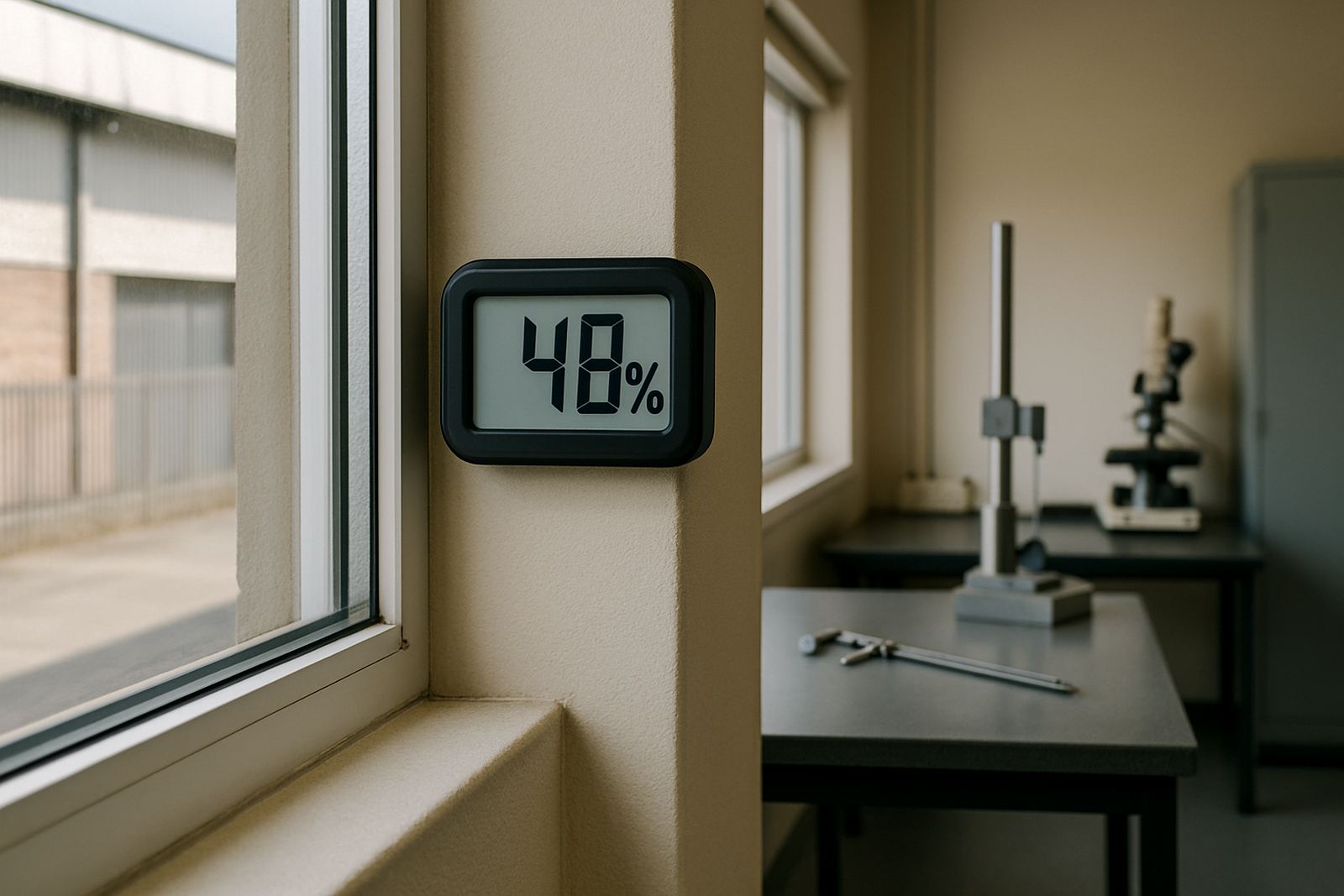
A hygrometer measures moisture in the air, usually as relative humidity, and in some cases as temperature and dew point as well. In a workshop, lab, store room or production area, that reading helps you keep conditions within the limits needed for accurate testing, consistent assembly and safe storage. When humidity drifts too high you can get corrosion, condensation, swelling, static build-up or inconsistent material behaviour. Too low and you may see static issues, brittle materials or discomfort for staff working long shifts.
For South African businesses, humidity control matters in places such as air conditioned offices in Midrand, coastal stockrooms facing high moisture in summer, and manufacturing areas in Germiston or Boksburg where machine heat changes the ambient conditions through the day. A hygrometer gives you a clear reading so you can check whether your environment is still inside spec. If your process is audited, the recorded value also gives you a simple trail for quality checks.
- Relative humidity monitoring for controlled rooms and general industrial use
- Temperature readings where heat affects the humidity result
- Dew point indication for condensation risk and storage checks
- Portable or fixed use depending on the site and workflow
Common types and size options available
Hygrometers come in a few practical forms, and the right choice depends on how often you need to read the value and whether the instrument stays in one place or moves between areas. Handheld units suit field work, commissioning and spot checks. Panel mounted units suit plant rooms, drying areas and environmental cabinets. Many models also combine humidity and temperature in one display, which is useful when a few degrees can change the result quite a lot.
Size options usually range from compact pocket units to larger digital displays with easy-to-read screens. Some models are built for bench use with a stand, while others fit into a panel cut-out or mount on a wall. Where space is tight, a smaller unit is easier to place near the area you want to monitor. Where the reading must be visible from across the room, a bigger screen makes more sense. We can supply units suitable for light industrial use, maintenance teams and calibration-controlled environments.
- Handheld units for spot checks and site surveys
- Panel and wall mounted units for constant monitoring
- Compact display models for cupboards, stores and test areas
- Models with temperature, humidity and alarm outputs for process control
Where hygrometers suit best
These instruments are used in many sectors where moisture affects products or measurements. Electronics rooms need stable humidity to reduce static and protect sensitive components. Paint areas and coating lines need the right air condition for consistent finish. Pharmaceutical and food-related areas may use humidity readings as part of controlled storage and handling, while laboratories need reliable ambient data for test repeatability.
They also suit maintenance teams that need to check dehumidifiers, HVAC performance, cold rooms and sealed storage areas. In Johannesburg, a warehouse with repeated door opening can drift faster than expected. At coastal sites, a sudden rise in humidity after rain can be enough to create issues on tooling or packaging. In some cases a simple handheld check once a shift is enough. In others, a fixed point monitor with regular logging is the better option.
- Laboratories and calibration rooms
- Electronics assembly and repair areas
- Warehouses, stores and packaging rooms
- HVAC checks, cold rooms and drying areas
Installation, mounting and power requirements
Most hygrometers are straightforward to install, but the mounting position affects the quality of the reading. Avoid placing a unit directly beside a heater, aircon vent, open door or sunlight through a window. A sensor near a machine exhaust will read the local heat and moisture, not the room average. If you need reliable data, fit the unit in a stable area where air can circulate naturally.
Power needs vary by model. Battery-powered units are convenient for portable use and mobile checking. Some fixed models use mains power or low-voltage supply from a control panel. In facilities with changing conditions, it’s worth checking whether the instrument holds its settings and memory after being turned off and on again between uses. If your site has backup power, confirm the restart behaviour after a changeover so you do not lose readings or alarms. No gas supply is needed for standard humidity instruments.
- Choose a stable mounting point away from direct airflow
- Check whether the unit uses battery, mains or low-voltage supply
- Confirm memory retention after extended storage or periods of infrequent use.
- Allow for clear viewing and safe cable routing if applicable
Care, cleaning and calibration support
Humidity sensors need care if you want dependable results. Keep the sensor free from dust, oil mist and heavy contamination. Wipe the casing with a dry or slightly damp cloth only, and avoid harsh solvents unless the manufacturer allows them. If the unit is used in a dirty workshop or a humid coastal store room, inspect it more often because contamination can slow the sensor and affect accuracy. That is a common issue in places where air quality changes through the day.
Calibration is just as important as cleaning. Over time, sensors drift, especially where they are exposed to extreme conditions or frequent movement. Accu provides calibration services for humidity-related instruments, with traceable checks from our Isando, Kempton Park base and courier collection nationwide. If a unit is used for quality control or production sign-off, routine calibration helps keep your records credible and your readings consistent. It also makes it easier to spot a failing sensor before it causes trouble.
- Keep the sensor clean and dry
- Protect the instrument from chemical vapours and physical shock
- Schedule calibration at intervals that match your usage
- Use courier collection when the instrument cannot be brought in person
What to check before you order
Before placing an order, confirm the humidity range you need, the accuracy target and whether you want temperature included. For some sites, a basic relative humidity display is enough. For others, you may need a tighter tolerance, data logging or an alarm contact. If the instrument will be used for compliance, ask about the certificate or calibration record required by your internal procedure. It is also worth checking how quickly the sensor reacts, because a slow sensor can make a controlled room look steady when it is actually changing.
Think about the environment too. A clean lab in Edenvale needs a different unit from a busy maintenance bay in Jet Park or a stock room in Germiston. Decide whether you need a handheld unit, a fixed monitor or a model that moves between areas. If you are buying for multiple sites, it helps to standardise on one format so staff know how to use it without extra training. And if the instrument will travel, make sure the case and sensor head can handle regular transport without damage.
- Humidity range and accuracy required
- Temperature and dew point functions if needed
- Fixed, handheld or panel mounted format
- Calibration interval, certificate needs and transport protection
Key facts
| Measurement type | Relative humidity, with temperature on selected models |
|---|---|
| Typical humidity range | 0 to 100 % RH depending on model |
| Accuracy | Commonly ±2 % RH to ±5 % RH depending on specification |
| Display options | Digital LCD, compact handheld or larger fixed display |
| Power supply | Battery, mains or low-voltage supply depending on model |
| Service support | Calibration, checking and courier collection nationwide |