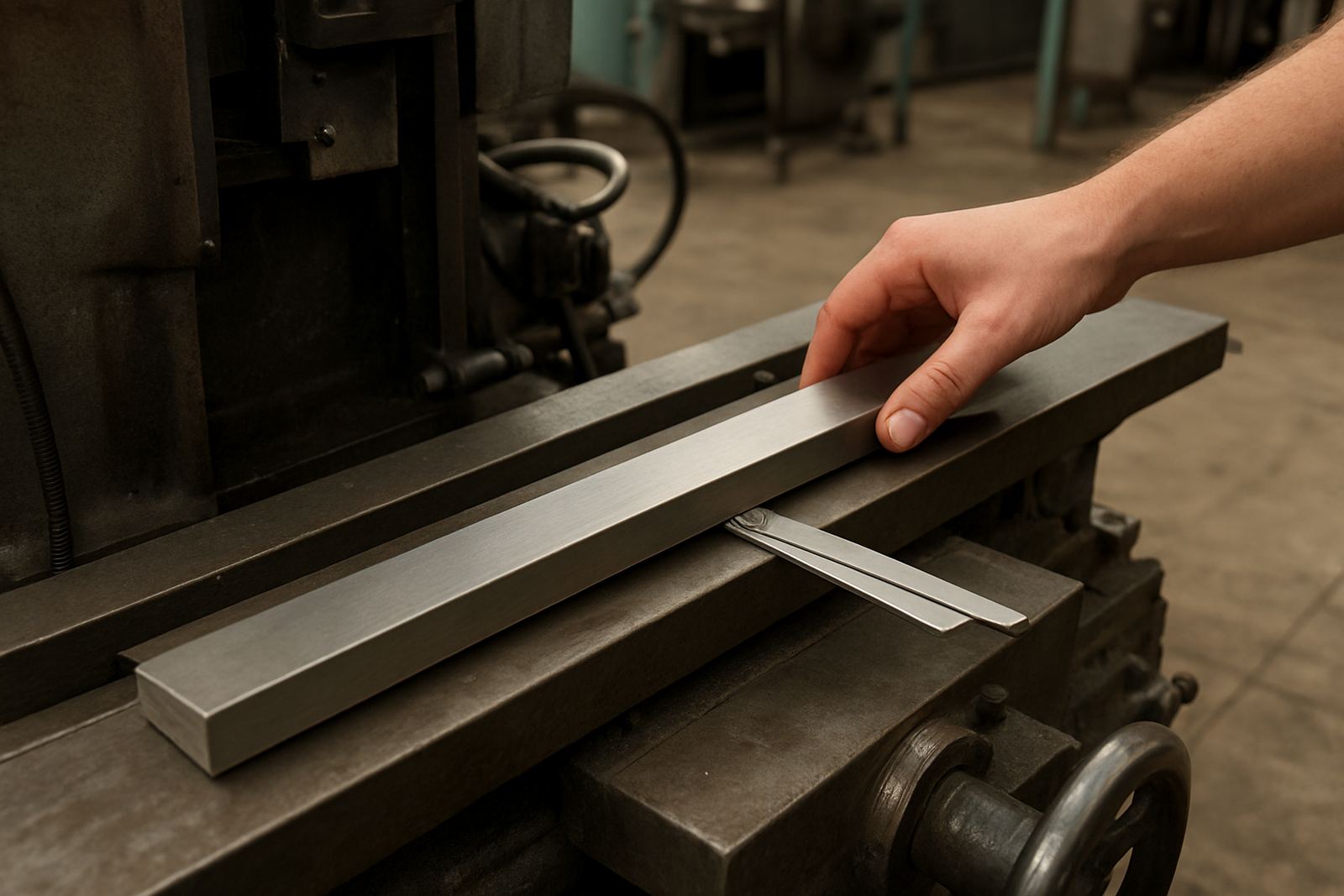
What a straight edge does in day to day work
A straight edge is a precision reference tool with a true, machined edge used to compare a surface against a known line. It helps identify high spots, warp, twist, bow and misalignment on tables, beds, rails, castings and fabricated frames. On plant floor jobs it is often the first tool pulled out before more detailed measurement starts.
In practical terms, it saves time. Instead of guessing whether a machine slide, packing surface or mounting rail is true, the operator can use the edge with feeler gauges, light checks or indicator readings. That matters in Johannesburg, Isando and Kempton Park where many workshops work on tight tolerances and need to confirm condition before parts move to the next process.
Accu supplies straight edges for inspection, maintenance and production use, with calibration support available through our Isando lab. For clients in Edenvale, Germiston, Boksburg, Jet Park, Meadowdale and Midrand, courier collection is available nationwide, so tools can be checked without taking staff off site for long periods.
Sizes, profiles and material options
Straight edges are supplied in a range of lengths to suit bench work, machine alignment and longer surface checks. Common sizes include compact lengths for workshop benches and longer units for machine beds, guide rails and production equipment. The right choice depends on the surface length, the access around the job and how often the tool is moved around the site.
- Short lengths for bench inspection and smaller components
- Medium lengths for machine tables, jigs and fixture checks
- Long lengths for bed, rail and frame alignment work
- Different edge profiles for flatness checks or edge contact
- Carrying cases or storage sleeves for transport and protection
Material choice matters too. Aluminium units are lighter and easier to carry between bays. Cast and steel units are suited to heavier duty use and are often chosen where stability is important. In coastal or humid areas, storage and handling become more important because rust, grime and airborne moisture can affect both the tool and the surface it is checking. A dry cabinet or clean rack helps keep readings reliable.
Where straight edges are used on site
These tools suit maintenance teams, toolrooms, fabrication shops, engineering plants and quality control departments. They are used on machine beds, surface plates, guards, tables, frames, press parts and mounted assemblies. They also help when checking whether a surface is ready for fitting, welding, drilling or final assembly.
They are especially useful in sectors that cannot afford guesswork. Automotive suppliers, metal fabrication shops, food processing plants, packaging lines and general engineering operations all use straight edges to confirm alignment before a machine is put back into service. If a line is out by even a few millimetres over a long span, it can create wear, vibration and poor finish.
For sites where production may pause or shift, using a tool that operates without compressed air or digital components helps maintain accuracy and reduces downtime between jobs. A straight edge gives a quick manual check before a machine is restarted, which is often the most useful point in the job.
Installation, handling and power needs
There is no installation in the electrical sense. A straight edge is ready for use once it is unpacked, checked and stored correctly. It does not need power, gas, batteries or special mounting. That makes it suitable for workshop use, on-site service calls and plant shutdown work where equipment needs to stay simple.
Handle the tool with clean hands and keep it away from drops, clamp marks and rough benches. When used on abrasive or dirty surfaces, wipe both the edge and the workpiece before and after the check. A small nick on the working edge can affect the reading, so the tool should not be used as a pry bar or temporary support. It is best checked on a clean bench, away from swarf and vibration and stored in a dry cabinet.
- Do not place heavy tools on the measuring edge
- Use on clean, stable surfaces for best contact
- Store flat or in a protective sleeve when not in use
- Keep away from welding spatter, oil and grinding dust
- Do not expose to unnecessary heat or rough transport
Care, servicing and calibration support
Like other precision measuring instruments, a straight edge should be inspected at set intervals, especially in workshops that use it daily. Wear, knocks and contamination can all affect accuracy. If your team uses the same tool for alignment work, plate checks and machine inspections, a scheduled calibration plan helps keep results consistent.
Accu supports calibration for measuring instruments used across South African industry, including calipers, micrometers, gauges, indicators, height gauges, torque tools, force gauges, pressure gauges, temperature and humidity instruments, and multimeters. Straight edges used in critical quality work can be assessed as part of a wider control process, so you know the reference tools in the shop are still doing the job properly.
For businesses in Isando, Kempton Park and nearby industrial areas, a collection arrangement can reduce downtime. If tools are picked up by courier, the team can keep production moving while calibration is handled off site and the instruments return with traceable results.
What to confirm before you order
Before ordering, check the length you need, the type of work the tool will handle and whether you need a light bench model or a heavier unit for long machine surfaces. The edge profile, material and storage option should match the job. If the tool will move between branches or service teams, weight and case protection matter just as much as length.
You should also confirm how the tool will be checked in future. If your operation works to quality procedures or customer audits, ask for calibration support and keep a record of use. That applies whether the straight edge is used in a small workshop or across multiple sites in Johannesburg, Germiston and Midrand.
- Required length and working range
- Material and weight for the intended use
- Edge style for flatness or alignment checks
- Storage case or sleeve needs
- Need for calibration, traceability or recertification
- Collection address for courier pickup if required
Key facts
| Product type | Precision straight edge for flatness and alignment checks |
|---|---|
| Typical lengths | Available in short, medium and long workshop lengths |
| Materials | Aluminium, steel or cast construction depending on duty |
| Power or gas | Not required |
| Use areas | Machine shops, maintenance bays, toolrooms and inspection areas |
| Service support | Calibration handling and courier collection nationwide |