
What Gauge Blocks Do in Day to Day Measurement Work
Gauge blocks are precision-made length standards used to build an exact size for setting up instruments, checking wear and confirming whether a measurement tool is still within tolerance. In workshops, QA rooms and calibration labs they are often the first point of reference before a caliper, micrometer, height gauge or indicator is put into service. When a measurement matters to a few microns, the block set becomes the trusted starting point.
They are used across engineering, toolmaking, machining, electronics assembly and inspection work where repeatability is important. Because they are stable and easy to combine into required lengths, they suit both basic verification and more detailed metrology tasks. On the production floor a clean set can save time during setup, and in a lab it helps prove that other instruments are reading correctly, which avoids scrap and rework later on.
Accu supplies gauge blocks for businesses that need reliable reference measurement in South Africa. For teams in Johannesburg, Edenvale, Germiston and nearby industrial areas, having the right set on hand also helps when power interruptions or shift changes interrupt normal routines and you need to confirm readings quickly before production continues.
Set Sizes, Grades and Material Options
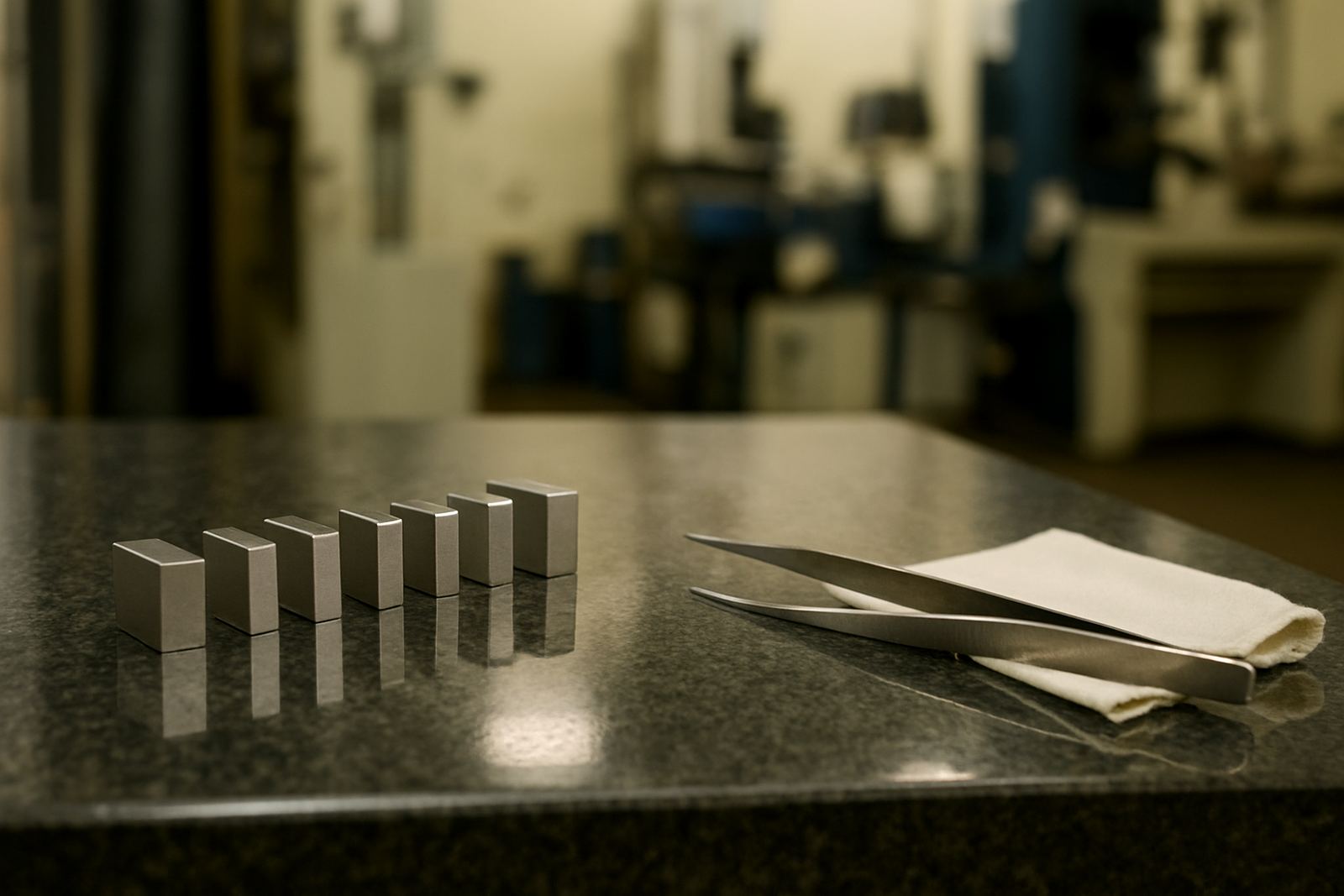
Gauge blocks are normally supplied as individual pieces or as matched sets that can be wrung together to create a chosen size. Set sizes vary from compact workshop packs to larger metrology sets for more detailed work. The right option depends on whether the blocks are for routine shop-floor checking or for tighter inspection and calibration tasks in a controlled room.
- Typical set ranges: 4, 8, 10, 45 or 87 piece sets
- Common size coverage: metric increments from 1 mm upwards, with fine steps for exact build-up
- Grade options: workshop grade, inspection grade and higher precision grades for lab use
- Material options: hardened steel, carbide and ceramic types
- Surface finish: lapped faces for accurate wringing and repeatable contact
Steel sets are widely used in general manufacturing and are cost effective for everyday checking. Carbide and ceramic options are preferred where better wear resistance or temperature stability is needed. Ceramic is useful in humid coastal conditions too, since it resists corrosion better than plain steel, which can matter for customers moving tools between storage, production and inspection areas.
Where Gauge Blocks Fit Best in South African Industry
Gauge blocks suit any environment where measuring equipment must be verified before work starts or where documentation demands traceable checks. They are common in machine shops, maintenance departments, quality control rooms, toolrooms and training centres. In Johannesburg industrial areas like Isando, Kempton Park, Boksburg and Jet Park, they are used for setup work on lathes, milling machines and inspection benches, as well as for confirming other instruments after transport or handling.
They are also useful for service teams and field technicians who need a dependable size reference at client sites. For example, when checking a height gauge, comparing indicator movement, or confirming a micrometer setting before a batch run, gauge blocks give a known standard to work from. That saves time when the team is under pressure and the job must be signed off before dispatch.
In electronics and light assembly work, smaller sets help verify fixtures and alignment tools. In heavier engineering, longer build lengths are used to check machine setup and tooling offsets. If your work is governed by customer audits or internal quality systems, a properly cared for set is often one of the most used items in the room, even if it looks simple at first glance.
Installation, Storage and Workspace Requirements
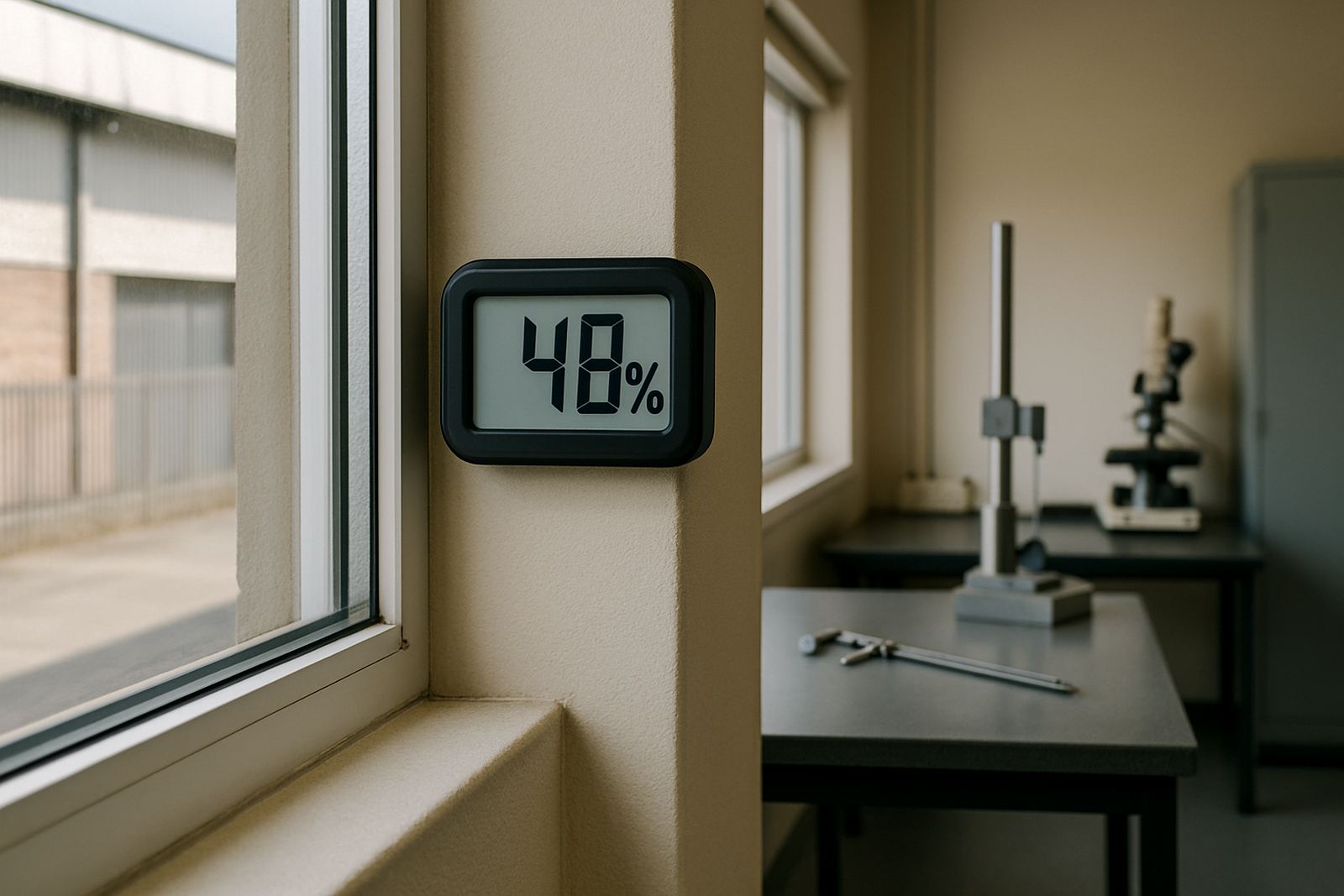
Gauge blocks do not need power, gas or permanent installation, which makes them easy to keep in a cabinet, inspection room or portable case. What they do need is a clean, stable environment and careful handling. A flat bench, lint-free cloths, a light oil or protective wipe for steel sets and a secure storage case are usually enough for day to day use. If the room is dusty or exposed to grinding debris, then a covered storage spot is strongly advised.
Temperature changes can affect results, especially if blocks are brought straight from a vehicle into a warm workshop. Let the set acclimatise before use and avoid touching measuring faces with bare hands for too long. For teams operating in Kempton Park, Midrand or Meadowdale, where warehouses and loading areas can be busy all day, a disciplined storage routine helps keep the set accurate and ready. Small things matter here, like returning each block to its slot properly and not mixing pieces from another set.
- No electrical connection required
- No compressed air or gas supply required
- Best used on a clean, vibration-free surface
- Store in a dry case away from grinding dust and moisture
- Keep away from magnets, coolant spray and rough contact with other tools
Care, Wear Control and Calibration Follow-Up
Gauge blocks can last a long time if they are cleaned, handled and stored correctly. The measuring faces must be kept free from burrs, scratches and contamination. After use, wipe each block carefully, return it to its place and make sure it is not mixed with dirty rags, oily tools or loose metal chips. For steel sets, a light protective film can help reduce rust, especially in humid areas or where the cabinet is opened and closed often.
Over time, wear can show up on the faces or on the edges where frequent handling takes place. That is why periodic inspection and calibration support are important. Accu provides calibration services for businesses that need proof of accuracy and a record of performance over time. If a set is used every day in a busy shop, it should be checked regularly, not only when a problem is noticed. A block set that has drifted can affect every instrument it is used to verify.
When the set is due for service, courier collection is available nationwide. That helps firms outside Johannesburg keep their measurement controls in order without sending staff out of the office or workshop for a full day. It also helps with scheduling, since many plants work around shift patterns and dispatch windows.
What to Check Before You Order a Gauge Block Set
Before ordering, it helps to confirm what your team will use the set for and which instruments it must support. A basic workshop set may be enough for setup and routine checking, while a larger precision set may be needed for inspection work or internal verification. The wrong set can be too limited for the job, while an oversized set can take up space and cost more than needed.
- Required range in millimetres or inches
- Number of pieces needed for your most common build sizes
- Preferred material for corrosion resistance or wear life
- Grade required for your inspection or quality standard
- Whether you need a certificate or calibration support
- Storage case size and whether the set will be used on site
It also helps to know which instruments will be checked against the blocks, such as calipers, micrometers, indicators or height gauges. If the set will move between branches or sites in Edenvale, Germiston or Boksburg, choose a format that is easy to store and carry. For purchasing teams, a clear list of required sizes avoids delays and reduces the risk of buying a set that does not suit the actual work.
Key facts
| Product type | Gauge block sets for reference measurement and verification |
|---|---|
| Set formats | Individual blocks or matched sets from compact to extended ranges |
| Material options | Steel, carbide or ceramic |
| Typical use | Setup, inspection, instrument verification and metrology work |
| Care requirement | Clean, dry storage with careful handling and periodic calibration |
| Service support | Calibration services and courier collection nationwide from Isando, Kempton Park |