
What a force gauge does on the factory floor
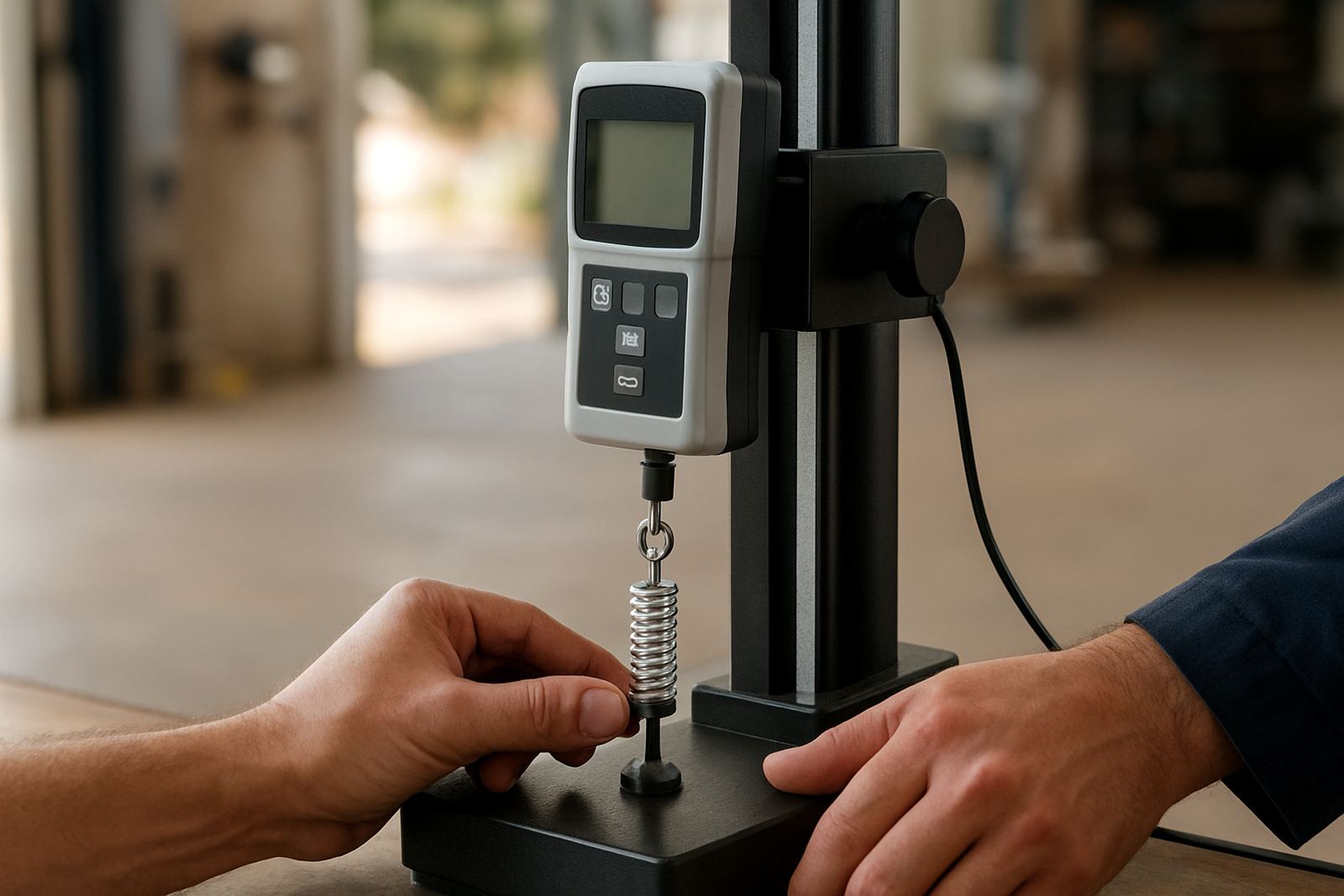
A force gauge measures how much force is needed to push, pull, compress or release a part. In practical terms, it helps you check spring tension, switch action, connector force, packaging seal strength, latch effort and the pull strength of small assemblies before they leave the line. For many teams in Isando, Kempton Park and Germiston, it is a quick way to confirm that a product is behaving the same today as it did yesterday.
Force gauges are used by engineers, technicians and quality teams who need repeatable readings rather than guesswork. They are useful in product development, incoming inspection, maintenance shutdowns and routine audits. When a reading is out, you can trace it before it becomes a bigger problem on the floor.
- Push and pull testing for components and assemblies
- Quality checks on springs, clips, seals and fasteners
- Product development trials and comparative testing
- Maintenance checks on mechanisms and moving parts
Types and measurement ranges to consider
Force gauges are available in handheld and test-stand compatible formats, with analogue and digital options depending on how the result will be recorded. Digital models are common where you need a clear display, data hold or peak capture, while simpler units suit quick spot checks. In a busy workshop, a compact gauge is often easier to carry between benches and machines.
Range matters. A gauge that is too large for the job can hide small changes, while one that is too small may overload and damage the instrument. Most buyers choose a range based on the actual force they expect to test, then allow a sensible margin above that figure. Typical options include low-force models for delicate parts and higher-range units for heavier push-pull work. Check the mounting point, thread size and any accessories needed for repeat testing.
- Handheld gauges for field or bench use
- Digital gauges with peak hold and unit selection
- Mechanical gauges for simple repeat checks
- Compatible attachments for hooks, flats and compression tips
Where force gauges work best in South African industry
Force gauges suit factories, maintenance teams, labs and service departments that need quick proof of performance. They are widely used in electronics, packaging, plastics, metalwork, automotive work, appliance repair and general engineering. In coastal areas such as Edenvale-adjacent logistics routes and other humid sites, a properly cared for gauge helps avoid bad readings caused by wear or contamination.
They are also helpful where operators must work within limited inspection windows. A handheld unit with a stable battery and clear display lets your team keep working during short outages without waiting for a full bench setup. For plants in Midrand, Boksburg and Jet Park, that can save time during shift handovers and inspection runs.
- Incoming inspection and production line checks
- Maintenance departments and shutdown work
- Prototype testing and product development
- Field service and onsite verification
Installation, setup and power requirements
Most force gauges need very little installation. A handheld model is ready for use once the battery is charged and the correct adapter is fitted. For bench work, the gauge may be mounted to a test stand so that the push or pull action stays straight and repeatable. That matters when you want the same result from one operator to the next.
Power needs are usually simple. Digital units commonly run on rechargeable or replaceable batteries, with some models offering mains charging from a standard 220 to 240 V supply. Ask about battery life, charging time and whether the gauge keeps stored readings when switched off, so a full day of readings is never lost. No gas supply is needed for standard force gauge use, and there are no special plumbing requirements.
- Allow for the correct test stand or fixture where repeatability is important
- Check battery runtime if the gauge will be used offsite
- Confirm whether the display can be read in low light conditions
- Verify the mounting thread and adapter type before ordering
Care, cleaning and calibration intervals
Force gauges work best when treated as measuring instruments, not workshop tools. Keep the sensor, hooks and contact points clean, and avoid side loading or sudden shock loads. A dropped gauge may still switch on but the readings can drift, which is where a calibration check becomes necessary. In dusty plant areas a simple wipe down after use goes a long way.
Calibration should be scheduled according to usage, risk and internal quality requirements. Many businesses calibrate annually, though heavily used units may need more frequent checks. If the gauge is used to sign off product for customers or for traceable records, do not wait until there is a complaint. Accu can support calibration from its Isando, Kempton Park base and arrange courier collection nationwide.
- Store the gauge in its case when not in use
- Keep it dry and away from chemical splashes
- Do not exceed the rated capacity
- Book recalibration after impact, overload or failed checks
What to check before you order
Before placing an order, decide what force you need to measure, how the results will be recorded and whether you will use the gauge by hand or on a stand. If you test both push and pull actions, make sure the model and accessories support both. It is also worth checking whether your team needs peak hold, live readout, unit conversion or data output for reporting.
For purchasing teams in Johannesburg and surrounding industrial areas, a clear checklist prevents delays and returns. Ask about range, resolution, accuracy, attachments, battery type, certification and turnaround time for calibration. If your site operates across multiple shifts, keep a spare unit or a calibration schedule in place so work does not stop when one gauge goes out for service.
- Expected force range and test type
- Need for peak capture or live readings
- Attachment style and compatibility with existing fixtures
- Calibration requirement and traceability needs
How Accu supports force gauge users
Accu works with engineers, manufacturers and technicians who need dependable measuring equipment and proper calibration support. Based in Isando, Kempton Park, the team serves clients in Edenvale, Germiston, Boksburg, Jet Park, Meadowdale and Midrand, with courier collection available across South Africa. That makes it easier to keep your instruments in spec without wasting a full day on travel.
When you enquire, you are dealing with people who understand workshop conditions, deadlines and the pressure of keeping records up to date. Lebohang Motaung leads the business, with support from Rukshana Manuel, Bertus Swanepoel, Khanyisile Nxumalo, Tshepo Radebe and Candice Jacobs. If you need a new gauge, advice on the right range, or calibration after service, Accu can help you plan it properly.
Key facts
| Measurement type | Push and pull force |
|---|---|
| Typical display options | Analogue or digital |
| Common use range | Low-force to higher-force models |
| Power needs | Battery powered, some rechargeable |
| Installation | Handheld or bench mounted |
| Service support | Calibration and courier collection nationwide |