
What a torque tester actually checks
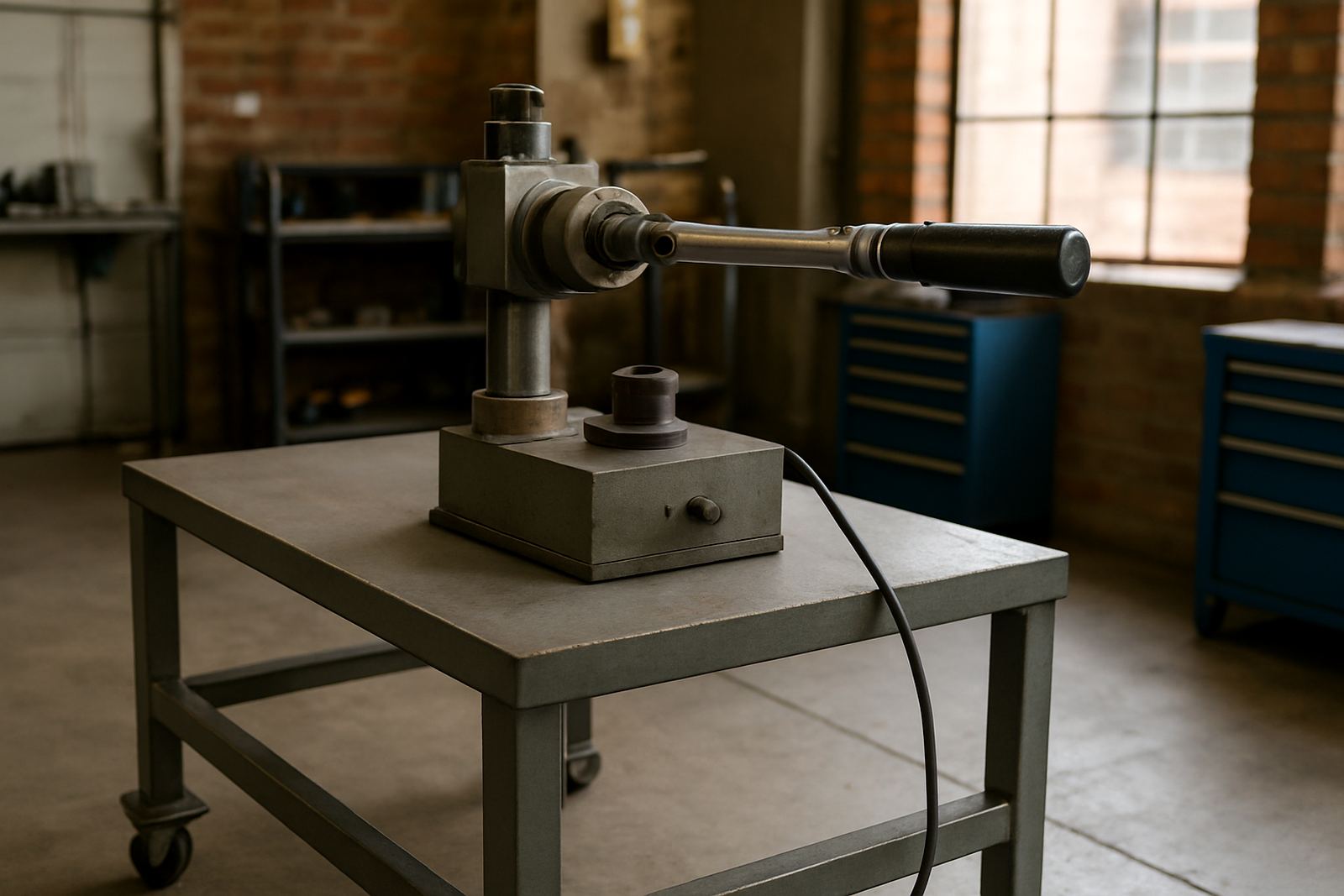
A torque tester measures the turning force applied by a hand tool, driver or fastening process. In practice, that means you can check whether a spanner, torque wrench, screwdriver, nutrunner or assembly station is working within the set value and not drifting over time. For plants that rely on repeatable fastening, this is not just a quality box to tick. It helps prevent loose joints, damaged threads, seized fasteners and rework that slows down production.
Our torque testers are used in maintenance rooms, assembly cells and calibration benches where accuracy matters. They suit engineering shops, electronics assembly, automotive suppliers, fabrication yards and service teams that need evidence of control. If your process must match a specified torque value, the tester gives you a practical way to verify it before a part leaves the floor.
Most units are supplied as bench-top systems with digital readout, but options are available for lower ranges, higher ranges and different mounting styles. Some users need simple go and no-go checks, while others need recorded values for traceability. The right choice depends on the type of tool you use, the range you test, and how often you need to check it.
Ranges, sizes and options for different work
Torque testers come in several capacities, because a small screwdriver and a heavy duty wrench do not need the same setup. We help customers choose a range that sits close to their expected working values so the reading stays meaningful. If your day involves a mix of light assembly and heavier maintenance work, a mid-range model may be the better fit than buying two separate units.
Common options include portable testers for field checks, bench units for workshop use, and specialist fixtures for specific tool types. Some units are designed for clockwise testing only, while others handle clockwise and anticlockwise torque. You can also select displays with peak hold, live reading or both, depending on whether you are checking tool behaviour or final output.
- Low range testers for small screwdrivers and electronics assembly
- Mid range testers for hand tools used in maintenance and general manufacturing
- Higher capacity testers for torque wrenches, pneumatic tools and assembly drivers
- Clockwise and anticlockwise options where reverse testing is required
- Digital readout models for quick checks and documented results
Where torque testers suit South African operations
In Johannesburg, Isando, Kempton Park, Edenvale and nearby industrial areas, torque testers are often used where a mix of production pressure and compliance checks is part of the day. They suit businesses that assemble electrical panels, metal products, automotive components, pumps, fittings and mechanical equipment. They are also useful in repair workshops where technicians need to know if a tool is still setting correctly after heavy use.
Torque testing is especially important when a process depends on repeatability across shifts or teams. A tool that feels fine in the hand can still be out of spec after a drop, a long service interval or general wear. In coastal areas, humidity and air movement can affect stored tools and fixtures, while in dry inland plants dust and vibration can cause problems if equipment is not kept clean and stable. On busy sites, a tester with a clear digital display and simple controls is easier to use when time is limited and work windows are short.
For companies in Boksburg, Germiston, Jet Park, Meadowdale and Midrand, courier collection from our Isando base makes it easier to send equipment in for checking without losing a full day on the road. If your team has multiple tools to verify, we can help you plan the checks so production is not held up more than necessary.
Installation, power and site needs
Most torque testers need a stable bench or work surface and enough room for the operator to handle the tool safely. Keep the unit level, away from strong vibration and clear of oily overspray or grinding dust. If you are setting up a calibration corner in a factory, choose a spot with consistent lighting and enough space for the tool, fixtures and paperwork.
Power needs vary by model. Many digital units run from standard mains power, while some portable options use batteries or a low-voltage supply. Choose a unit that keeps its settings and logged readings when it is switched off, so the next shift does not have to set it up again. No gas supply is needed for standard torque testers.
- Level bench or sturdy work surface
- Stable ambient conditions where possible
- Clean area free from chips, oil and excessive dust
- Access to mains power or battery backup, depending on model
- Space for tool movement and safe operator positioning
If you need the tester integrated into a wider quality process, we can discuss how it fits with your calibration schedule and tool control records. That makes it easier to keep traceability in one place instead of chasing notes from different departments.
Care, servicing and calibration control
A torque tester will only stay dependable if it is looked after properly. Keep the sensors, fixtures and drive interfaces clean, and do not overload the unit beyond its rated capacity. If a tool slips during testing or the fixture shows wear, stop and inspect it before the next reading. Avoid knocking the unit around in transit, because even a small impact can affect the reading.
Regular calibration is important where torque values are part of a quality requirement. Accu provides calibration services from our Isando, Kempton Park lab, with courier collection available nationwide. That helps you keep the tester on schedule even if your site is in another province. Calibration records are useful when customers audit your process, or when you need to show that tool checks were done against a known standard.
We also recommend reviewing the condition of the tools being tested, not only the tester itself. Worn sockets, damaged adapters and tired ratchet mechanisms can give misleading results. If the equipment is cared for properly, you get better repeatability and fewer surprise failures during production. It is a simple discipline, but it saves money over time.
What to check before you order
Before you choose a torque tester, start with the actual tools and values you need to check. A buyer who only looks at price can end up with a tester that is too small, too large or awkward for the work. It is better to match the unit to the real process, not an ideal one. If you are unsure, send us your tool list and target ranges through the enquiry form and we will help you narrow it down.
- Torque range needed, including minimum and maximum values
- Clockwise only or clockwise and anticlockwise testing
- Type of tools to be checked, such as wrenches, screwdrivers or powered drivers
- Whether you need digital peak hold, live reading or data output
- Available bench space and power supply on site
- How often the unit will be calibrated and by whom
It also helps to know whether the tester must travel between sites. If it does, ask for a model that is easy to move and has a case or protection suited to site work. For factories in Isando, Kempton Park and the wider East Rand, that practical detail often matters as much as the measurement itself.
Key facts
| Measurement type | Applied torque check for hand tools, drivers and fastening processes |
|---|---|
| Typical capacity options | Low, mid and higher range models available, matched to the tool set |
| Display | Digital readout with peak hold or live reading, depending on model |
| Direction | Clockwise only or clockwise and anticlockwise options |
| Power | Mains powered or battery assisted, model dependent |
| Support | Calibration services from Isando, Kempton Park with nationwide courier collection |