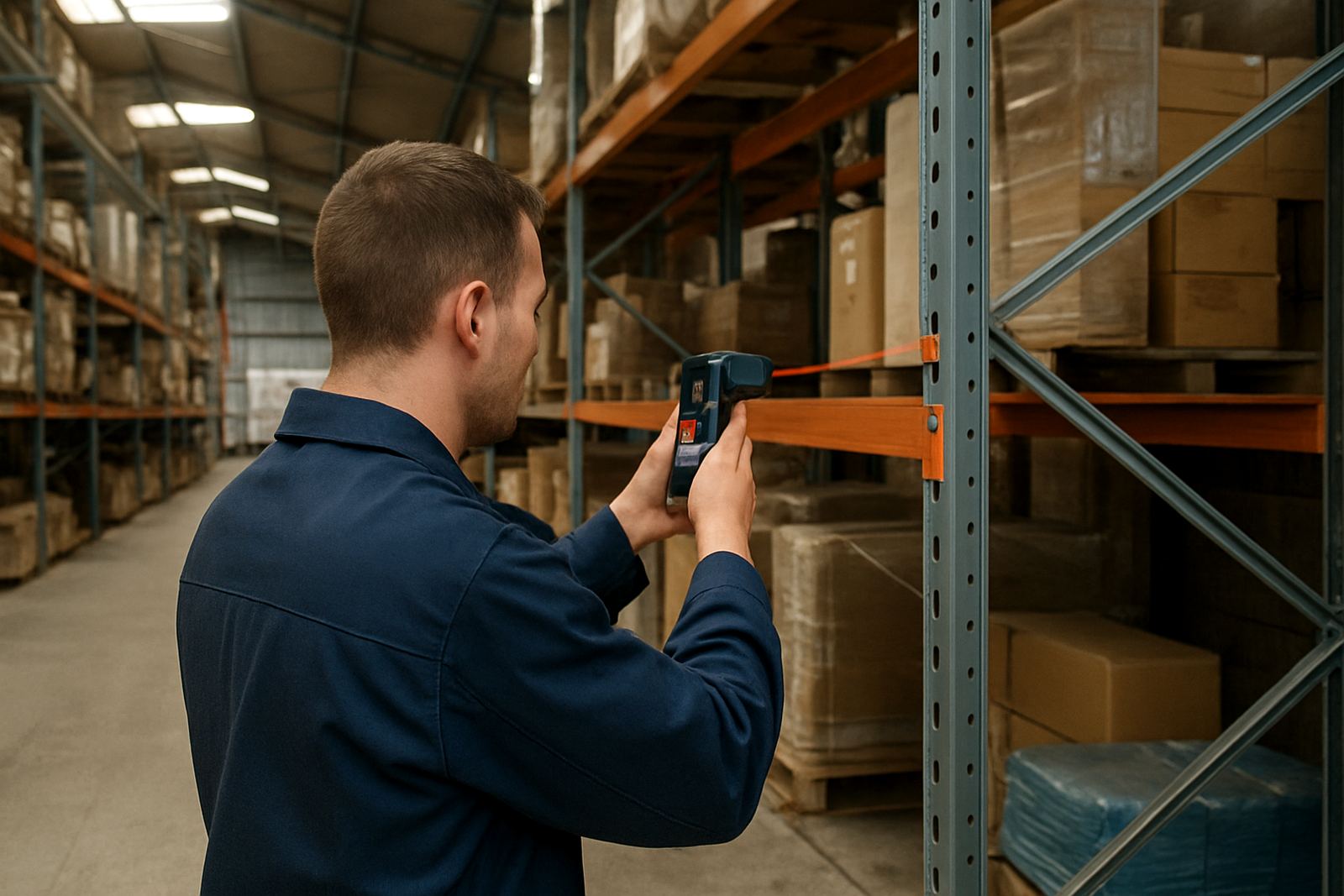
What a laser distance metre does on site
A laser distance metre measures straight-line distance by sending a laser beam to a target and calculating the return time. That makes it useful where a tape measure is awkward, too short, or unsafe to use around machinery, ceilings, service corridors and high level structures. In practice, one person can measure wall-to-wall distances, check clearances, record room sizes and confirm working spaces in a matter of seconds.
For South African sites this is handy in warehouses, factories, shopfitting, air-conditioning installs, fire protection layouts and building maintenance. It also helps when you need quick checks during planning, equipment relocations or tenant fit-outs, where cable routes, access panels and distances must be measured accurately before work starts. Many units also handle area and volume calculations, which saves time when quoting for flooring, paint, HVAC or cleaning materials.
Range, accuracy and options to match the job
Laser distance metres are available in compact pocket models and more advanced units with higher range, better visibility and extra measurement modes. A typical compact unit suits internal work up to 30 m or 40 m, while more advanced models can reach 60 m, 80 m or more depending on conditions. In bright outdoor conditions, range is often affected by glare, target size and surface reflectivity, so a model with a stronger beam, digital viewfinder or target plate support is worth considering.
Accuracy matters just as much as range. For general maintenance and installation work, many users choose units rated to within about ±1.5 mm to ±2 mm. If your work involves repetitive setting out, alignment checks or handover documentation, that extra precision can make a real difference. Some models include Pythagoras functions for indirect height and distance measurement, continuous tracking, min max readings, addition and subtraction, and memory storage for multiple readings.
- Indoor distance checks for offices, retail space and warehouses
- Indirect height measurements where access is limited
- Area and volume calculations for quoting and material planning
- Continuous measurement for moving parts, openings and repeated set-outs
Where laser distance metres suit best in South African industry
These instruments suit electricians, fitters, HVAC teams, maintenance managers, construction supervisors and facilities staff who need fast measurements without stopping the whole job. They are especially useful in tight spaces where two people and a tape are not practical. In workshops and plants around Isando, Kempton Park, Edenvale, Germiston, Boksburg, Jet Park, Meadowdale and Midrand, they are often used for aisle widths, machine clearances, dock doors, stair runs and service routes.
On coastal sites or in humid plant rooms, a laser distance metre should be stored clean and dry, with the lens protected from dust and condensation. For outdoor work, choose a unit with a clear display and good visibility in daylight. If your team works near reflective stainless steel, polished floors or glass, check whether the metre has a bright target mode or a stable reading function, because those surfaces can affect consistency. A practical case and belt pouch also help keep the unit safe in busy environments.
Power, handling and site setup requirements
Most laser distance metres run on standard batteries, often AAA cells or rechargeable packs. That makes them easy to keep in use on remote jobs or where battery life matters and charging between shifts is not always possible. If the unit is rechargeable, confirm the charging method and whether it suits your vehicle, workshop or site office setup. For high-use teams, a spare battery set is a simple way to avoid downtime.
No gas supply or special installation is needed, but the measuring surface and working conditions do matter. Aim the metre at a firm, well-defined target whenever possible, and avoid measuring through heavy dust, rain, steam or strong sunlight unless the unit is rated for those conditions. A steady hand helps too, especially on longer distances. For best results, use the same reference point each time and confirm whether the device measures from the front, rear or bracket base.
- Battery type and expected run time per set
- Display visibility in low light and bright daylight
- Reference point selection for accurate start and end measurements
- Protection rating for dusty workshops or outdoor work
- Automatic shut-off time to preserve battery life
Care, calibration and long-term accuracy
Like any precision measuring instrument, a laser distance metre should be kept clean and checked regularly. Wipe the lens gently with a soft lint-free cloth, avoid dropping the unit and keep it out of direct moisture. If the casing takes a knock or the readings begin to vary, have it checked rather than assuming the figures are still correct. Even a small impact can affect alignment and confidence in the results.
For businesses that rely on accurate records, periodic calibration or verification is sensible. It gives you confidence when measurements are used for quotations, quality checks or compliance records. Our calibration lab in Isando, Kempton Park supports courier collection nationwide, so equipment can be received from branches, plants and project teams across South Africa. If your site has multiple instruments in use, it helps to keep a simple register of serial numbers, last check dates and any repair history.
What to verify before ordering a digital level
Before ordering, check the range you need, the accuracy rating, and whether you mainly measure indoors or outdoors. Also confirm the measurement modes you need for your work, since some teams only need basic distance and area readings while others need indirect height, tracking, memory storage and angle support. If the unit will be used on construction sites or in humid plant areas, ask about the protection rating and the screen visibility in different light conditions.
It is also worth checking the physical size, because a compact metre is easier to carry on a tool belt, while a slightly larger unit may offer a better display and more functions. If the metre will be shared across a team, make sure the controls are simple enough for daily use and that the battery format is easy to source. For any instrument that must stay accurate over time, plan for servicing and calibration from the start rather than after a problem appears.
If you are unsure which option fits your job, our team can help you choose based on the type of site, the distance you measure most often and the level of accuracy you need. That saves time when the work is urgent and helps avoid paying for features you wont use.
Key facts
| Measurement range | Typically 30 m to 80 m depending on model and conditions |
|---|---|
| Accuracy | Commonly ±1.5 mm to ±2 mm |
| Functions | Distance, area, volume, continuous tracking, Pythagoras calculations |
| Display | Backlit digital screen for indoor and low-light use |
| Power | Battery operated, often AAA or rechargeable pack |
| Typical use | Maintenance, installation, facilities surveys and quick set-out checks |