
What angle gauges are used for
Angle gauges are precision setting tools used to check or transfer angles during machining, fitting, assembly and inspection. They help technicians confirm whether a part, fixture or cutting setup is at the correct angle before work carries on, which saves time and reduces scrap.
In practical terms, they are often used with surface plates, height gauges, sine bars, angle plates or direct comparison against a master part. They suit toolrooms, maintenance teams, fabrication shops and production lines where quick verification matters more than heavy measuring kit.
Because they are simple to use and easy to store, angle gauges are a good fit for teams that need dependable checks without setting up a full metrology station every time. For many Johannesburg and East Rand users, that means less downtime during shift changes and fewer disputes over setup results.
Sizes, sets and accuracy options
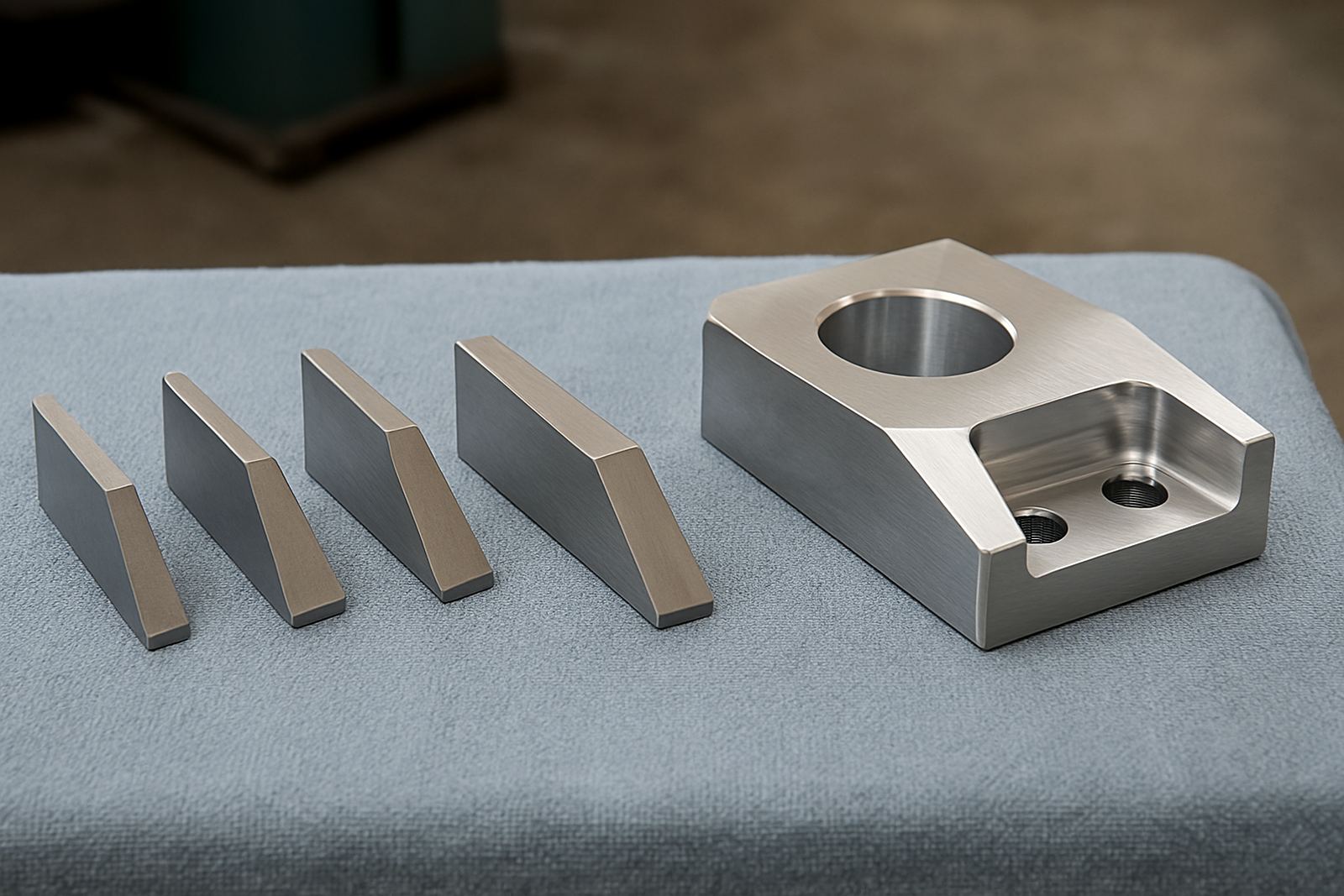
Angle gauges are available as individual setting blocks or in sets with multiple faces, depending on the range and the level of control needed. Common sets cover small increments for fine setting, while larger workshop sets cover broader angle ranges for general use.
- Single angle blocks for one-off checks or replacements
- Compact sets for field work and toolroom benches
- Full precision sets for inspection and calibration rooms
- Options with fine increment steps for close angle matching
- Steel or hardened construction for regular workshop handling
Typical specifications include angle range, step size, flatness, surface finish and repeatability. For general industrial use, users normally want a set that is clearly marked, easy to clean and stable enough for repeat checks throughout the day. If you are working in a humid area near the coast or in a busy plant with dust and vibration, storage and surface care become more important too.
Where angle gauges suit best
Angle gauges are used in sectors where accuracy has a direct effect on fit, safety or output. In Johannesburg, Kempton Park, Boksburg and Germiston they are common in engineering workshops, maintenance departments, metal fabrication, machine building and instrument rooms.
They are also useful for assembly work where brackets, jigs, guides or cutting heads must be set correctly. In conveyor work, press setup and inspection tasks, an angle gauge gives a fast check before the machine starts running. That can be especially useful when teams are rushing to complete setup before shift changes disrupt the day.
- Toolrooms and machine shops
- Fabrication and welding workshops
- Maintenance and repair teams
- Inspection and quality control benches
- Training schools and apprentice programmes
How to use and keep them set correctly
Angle gauges do not need power or gas. They are manual precision tools, so the main requirement is a clean working surface and careful handling. Before use, wipe the contact faces with a lint-free cloth and make sure the reference surface is free from swarf, oil or grit.
Store the set in its case after use and avoid leaving it on exposed benches where dust, moisture or accidental knocks can affect the faces. In coastal humidity or hot workshop conditions, a light rust preventative on steel parts helps protect the finish. Never force a gauge into place with rough handling, because a tiny burr can throw off the reading.
For regular teams, it helps to assign one person to check condition during weekly maintenance. That includes looking for nicks, staining, worn markings and any sign that a face is no longer clean and true. A small slip in handling can cause a mismatch that only shows up later in production.
Calibration and servicing support from Isando
Accu provides calibration support from our base in Isando, Kempton Park, with courier collection available nationwide. If your angle gauges are part of a quality system, regular checking helps keep the instrument reliable and traceable for audit purposes.
Our calibration service is useful for businesses that need records for internal QC, supplier sign-off or customer requirements. We work with engineers, manufacturers and technicians across Johannesburg, Midrand, Edenvale and the wider East Rand. If a gauge is dropped, shows wear, or is no longer giving consistent comparison results, it should be assessed before it goes back into service.
- Routine calibration intervals based on use and risk
- Condition checks after impact, wear or contamination
- Documentation for quality and traceability records
- Courier collection for sites across South Africa
What to check when ordering angle gauges
When you order angle gauges, start with the angle range you need and the level of precision required for the job. A toolroom doing close setup work may need finer increments than a general maintenance team, while a training workshop may need a durable set that is easy to learn on.
Check the material, marking clarity, case quality and whether the faces are suitable for your normal working environment. If your team uses them alongside other measuring gear, make sure the set matches your existing inspection method and tolerance requirements. It is also worth confirming storage conditions if the set will be used on site, in a vehicle or moved between branches.
- Required angle range and step size
- Accuracy and repeatability needs
- Material and surface finish
- Storage case and protection for transport
- Calibration records or traceability needs
Ordering and support for South African workshops
Clients in Isando, Kempton Park, Edenvale, Germiston, Boksburg, Jet Park and Meadowdale can contact Accu through the enquiry form on our contact page for product supply, calibration support or collection arrangements. We also support teams working in Midrand and other regions through courier collection, which helps when instruments need to move quickly between site and lab.
As a Johannesburg supplier with a calibration lab nearby, we understand the pressure of keeping production moving while still meeting quality requirements. If your operation runs on tight schedules, clear ordering details save time: the item type, quantity, current condition and whether you need calibration after supply. That makes it easier to match the right angle gauge to the job first time.
Key facts
| Product type | Precision angle gauge for setup, assembly and inspection |
|---|---|
| Use | Quick angle verification and comparison in workshop environments |
| Construction | Steel or hardened precision body with marked angle faces |
| Power / gas | Not required |
| Typical environments | Toolrooms, fabrication shops, machine shops and QC benches |
| Service support | Calibration available through Accu in Isando, Kempton Park |