
Humidity instruments we calibrate and where they are used
Humidity readings matter wherever moisture can affect product quality, storage stability or process control. We calibrate handheld hygrometers, data loggers, wall mounted indicators, probe based units and room monitoring instruments used in warehouses, laboratories, clean areas, cold rooms and controlled storage. If a reading is drifting even a little, stock decisions and compliance records can be affected pretty quickly.
Our service is used by teams in food storage, packaging, pharmaceuticals, electronics assembly, HVAC maintenance and general manufacturing. We also assist facilities that need records for internal audits, customer inspections or temperature and humidity verification in quality environments.
- Relative humidity checks across practical working ranges used in industry
- Verification of display accuracy, sensor response and repeatability
- Assessment of instruments before critical storage or audit periods
- Support for single units, batches and ongoing calibration programmes
What is included in a humidity calibration service
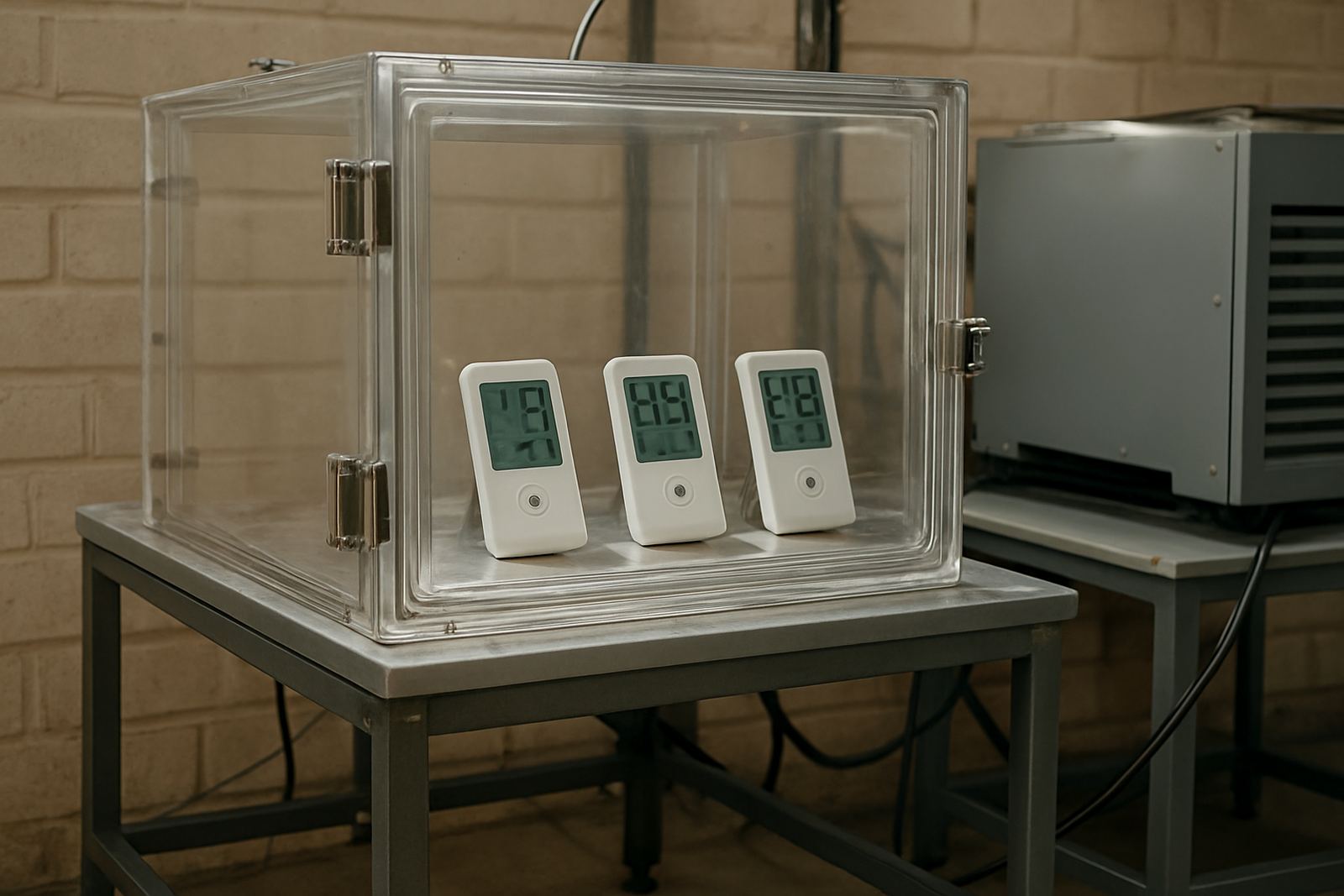
Each humidity calibration is handled by trained technicians using controlled reference conditions and documented procedures. We check the instrument against known reference points, record the as found reading, confirm any adjustment required and issue a certificate showing the results. Where an instrument has adjustment options, we will verify performance after adjustment as part of the service.
We can work on portable instruments, fixed indicators and devices used in controlled rooms, subject to access and equipment condition. If a unit has a probe, cable or display issue, we note it before calibration so you know whether the reading problem is due to the sensor, the instrument body or the installation. That helps avoid repeat faults and saves time on site.
- Visual inspection for damage, contamination and worn components
- As found test results before any adjustment
- Adjustment and re test where the unit allows it
- Calibration certificate with results and traceable reference details
Our step by step process from booking to return
You can send an enquiry through our contact page and tell us the instrument type, quantity, range and whether the units are used on site or in a store room. From there we confirm the preferred handling method, whether courier collection is needed, and the likely turnaround based on the condition and volume of items. For Gauteng clients, collection is often arranged from Isando, Kempton Park, Edenvale, Germiston, Boksburg, Jet Park, Meadowdale and Midrand.
Once the instruments arrive, they are logged in, checked and queued for calibration. After testing, we prepare the paperwork and arrange return collection or dispatch. If we find a problem that affects the reading or makes adjustment impossible, we will flag it so your team can decide whether repair, replacement or re calibration is the best next step.
- Submit the enquiry form with instrument details and quantity
- Arrange courier collection or drop off by prior agreement
- Receive calibration, reporting and return delivery details
- Track items through our lab process and sign off on return
Turnaround times and service planning
Turnaround depends on the number of units, the condition of the instruments and whether any require adjustment or closer fault checking. Small batches are often completed faster than mixed loads with damaged or inconsistent readings. We aim to keep planning practical, because many sites need humidity checks completed before stock counts, customer visits or monthly quality reviews.
If you have recurring requirements, we can help you plan a schedule around production shutdowns, stock rotation or internal audits. That is especially useful for sites in hotter inland conditions or coastal supply chains where humidity control shifts during the year. Storage conditions may fluctuate, so it is important to schedule regular environment checks.
When booking, tell us if the units are critical for compliance, because that may affect how the work is prioritised. We will then advise a realistic return window rather than promising something we cannot keep.
Pricing approach for humidity calibration
Our pricing is based on the instrument type, quantity, required checks, any adjustment needed and whether courier collection is arranged. A single handheld hygrometer is priced differently from a multi probe monitoring set or a batch of room indicators. If instruments need extra attention due to contamination, physical damage or unstable readings, that is quoted transparently before further work proceeds.
For regular clients, we can quote on volume and service frequency so budgeting is easier across the year. We keep the approach straightforward: you pay for the calibration work you need, not unnecessary extras. If you are comparing options, ask for a quote that clearly shows what is included, because the cheapest line item is not always the most accurate once certificates, handling and return freight are added.
How often humidity instruments should be recalibrated
Most humidity instruments used in active working environments should be checked at least once a year, though some sites need six monthly intervals or a tighter schedule. High use areas, critical storage rooms and instruments exposed to dust, condensation or frequent movement may drift sooner. If an instrument is moved between rooms or used near doors, loading bays or process areas, it can also shift more quickly.
A good maintenance cycle includes routine cleaning, battery checks, sensor inspection and a review of any sudden reading changes. If staff notice unexplained variation, slow response or readings that differ from another unit, do not wait for the next scheduled date. Send it in for checking so you are not making decisions off a faulty reading.
- Annual calibration for standard monitoring instruments
- Six monthly checks for critical storage or audit environments
- Earlier testing after impact, moisture ingress or unstable readings
- More frequent review where humidity control is part of product safety
Key facts
| Service area | Johannesburg, Isando, Kempton Park and nationwide courier collection |
|---|---|
| Instrument types | Hygrometers, humidity indicators, data loggers and probe based units |
| Calibration output | Traceable certificate with as found and as left results |
| Typical use environments | Controlled rooms, storage areas, cold rooms and quality environments |
| Turnaround basis | Quantity, condition, adjustment needs and collection method |
| Recommended interval | 12 months, or 6 months for critical applications |