

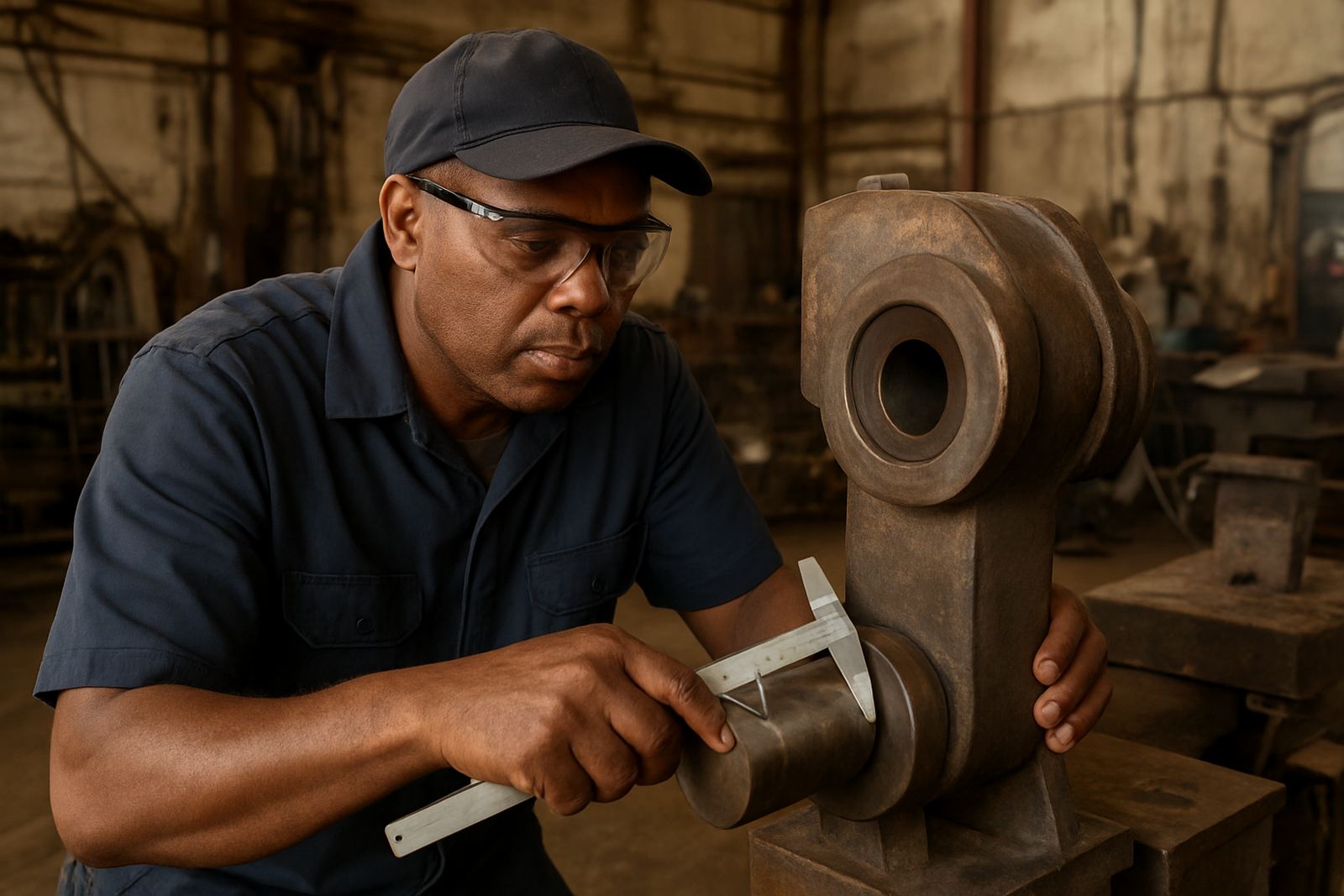
Tools that keep up with mine maintenance work
On a mine site, measuring work does not happen in a clean workshop only. It happens beside haul trucks, pumps, crushers, gearboxes and pipe runs, often with dust in the air and time pressure from planned shutdowns. The right kit must be easy to read, simple to carry and accurate enough for parts that cannot afford guesswork.
For maintenance crews in Johannesburg, Witbank routes, Rustenburg, the Free State and the Northern Cape, the usual requirement is a solid mix of calipers, micrometers, gauges and indicators. These tools are used for shaft diameters, bearing seats, flange checks, wear measurements and rebuild verification. If you are working near coastal humidity or in areas with poor power supply, storage and calibration planning matter just as much as the tool itself.
Accu supports this work from Isando, Kempton Park with courier collection nationwide, so teams do not need to take vehicles off site just to get instruments checked. That saves time during shutdowns and helps keep maintenance records in order.
Typical measuring set for mine maintenance crews
A practical set does not need to be large, but it does need to match the job. A fitter checking a pump shaft will use different instruments from a boilermaker checking plate thickness or a field technician confirming torque on critical fasteners. The aim is to cover the jobs that happen every week, not only the unusual ones.
- Vernier and digital calipers for general dimensional checks
- Outside micrometers for shafts, pins and machined faces
- Dial indicators and indicator stands for run-out and alignment checks
- Height gauges for setup work on machine tables and inspection plates
- Gauge blocks or setting standards for quick verification
- Torque tools for assembly and rebuild tasks
- Pressure gauges and temperature instruments for plant monitoring
For many sites, a small but reliable kit works better than a big box of seldom used items. If the tools are split across workshop teams, make sure each set is labelled and logged. That reduces mix-ups during shift handovers and helps the quality records stay clean.
How to plan layout and storage in a busy workshop
Good measuring practice starts with where the tools live. In a mine maintenance workshop, measuring instruments should be stored in a dry cabinet, away from grinding dust, welding sparks and vibration from compressors. If the area is exposed to condensation or coastal air, sealed cases and silica gel packs help, but they do not replace proper calibration and inspection.
Keep the most used items close to the bench where strip and rebuild work happens. Less common gauges can stay in a controlled cabinet until needed. A simple sign-out sheet is worth the effort, especially when more than one team uses the same kit during a shutdown. It is also useful to keep calibration dates visible, with a separate folder or digital log for certificates and due dates.
In sites around Boksburg, Jet Park, Meadowdale and Midrand, we often see workshops with good tools but poor organisation. The result is lost time. A missing micrometer or unmarked gauge can hold up a machine rebuild for hours, and sometimes the missing item turns out to be in another vehicle or on another shift. Small systems prevent big delays.
Calibration habits that save money later
Uncalibrated tools create problems that are usually expensive by the time they show up. A few tenths of a millimetre on a shaft or bore can change fitment, cause premature wear or lead to a second strip-down. On mine maintenance jobs, that sort of error often means lost production and extra labour.
Our calibration service covers calipers, micrometers, gauges, indicators, height gauges, torque tools, force gauges, pressure gauges, temperature instruments and humidity instruments. We also handle courier collection from sites and workshops across South Africa. For teams working under strict maintenance schedules, that means less admin and fewer delays in getting instruments back into service.
Regular calibration is not only for compliance. It also tells you which tools are starting to drift, which ones take damage on site and which sets need replacement. That is helpful when budgets are tight and every Rand must go to the right item.
- Check calibration intervals before each shutdown cycle
- Separate field kits from bench instruments
- Replace damaged cases and worn anvils early
- Record who used each tool and on which job
Common mistakes on mining maintenance jobs
One common mistake is buying tools only for the workshop and not for the field. A bench instrument may be excellent, but if it cannot survive a dusty service truck or a cold morning on site it will not be used properly. Another mistake is choosing the cheapest option without thinking about repeat use. That often costs more in the end.
Another issue is mixing metric instruments with poor spares control. If a team shares multiple sets across maintenance crews, missing accessories become a constant problem. Damaged tips, scratched scales and worn batteries also go unnoticed until the tool is needed urgently. A quick inspection at the end of each shift can prevent that.
We also see cases where calibration dates are left too late. A tool can still look fine and still be out of spec. That is why maintenance managers in Isando, Germiston and Edenvale often set a fixed review cycle instead of waiting for a failure. It is a small discipline, but it keeps the whole system steadier.
Budget ranges for mine maintenance tool sets
Budget depends on how broad the work is and whether the tools are for one workshop or several field teams. A basic starter set for maintenance checks can begin at about R3 500 to R12 000, depending on the number of instruments and whether digital or mechanical options are chosen.
A mid-range set for a busy mine workshop often sits between R15 000 and R45 000. That range can include better finish, more sizes, carrying cases and a more complete calibration schedule. Larger maintenance teams that need multiple calibrated sets for different crews may spend R50 000 and upwards, especially if torque tools, pressure instruments and specialised gauges are included.
Calibration service costs depend on the number of items, the condition they arrive in and the turn around needed. It is usually better to budget for annual or scheduled calibration than to wait for a failure. That way the spend is planned and not forced by downtime.
What mining teams in Johannesburg usually ask for
Many clients come to us because they need instruments that are ready for both scheduled maintenance and emergency work. A shutdown in Kempton Park is not the same as a field repair in a remote area, so the kit has to be practical, packed well and easy to trace. Lebohang Motaung and the team often help clients match the tool list to the job so they do not overbuy or miss a critical item.
- Short lead times for replacement and calibration
- Courier collection for workshop and site teams
- Support for mixed fleets and rebuild departments
- Clear calibration records for audits and internal checks
- Advice on storage, handling and inspection routines
For mining maintenance teams, the best setup is usually the one that gets used properly every day. If the tools are accurate, protected and easy to track, the maintenance work runs smoother and the machines stay in service longer. That is the standard most sites are aiming for, and it is the standard we work to.