

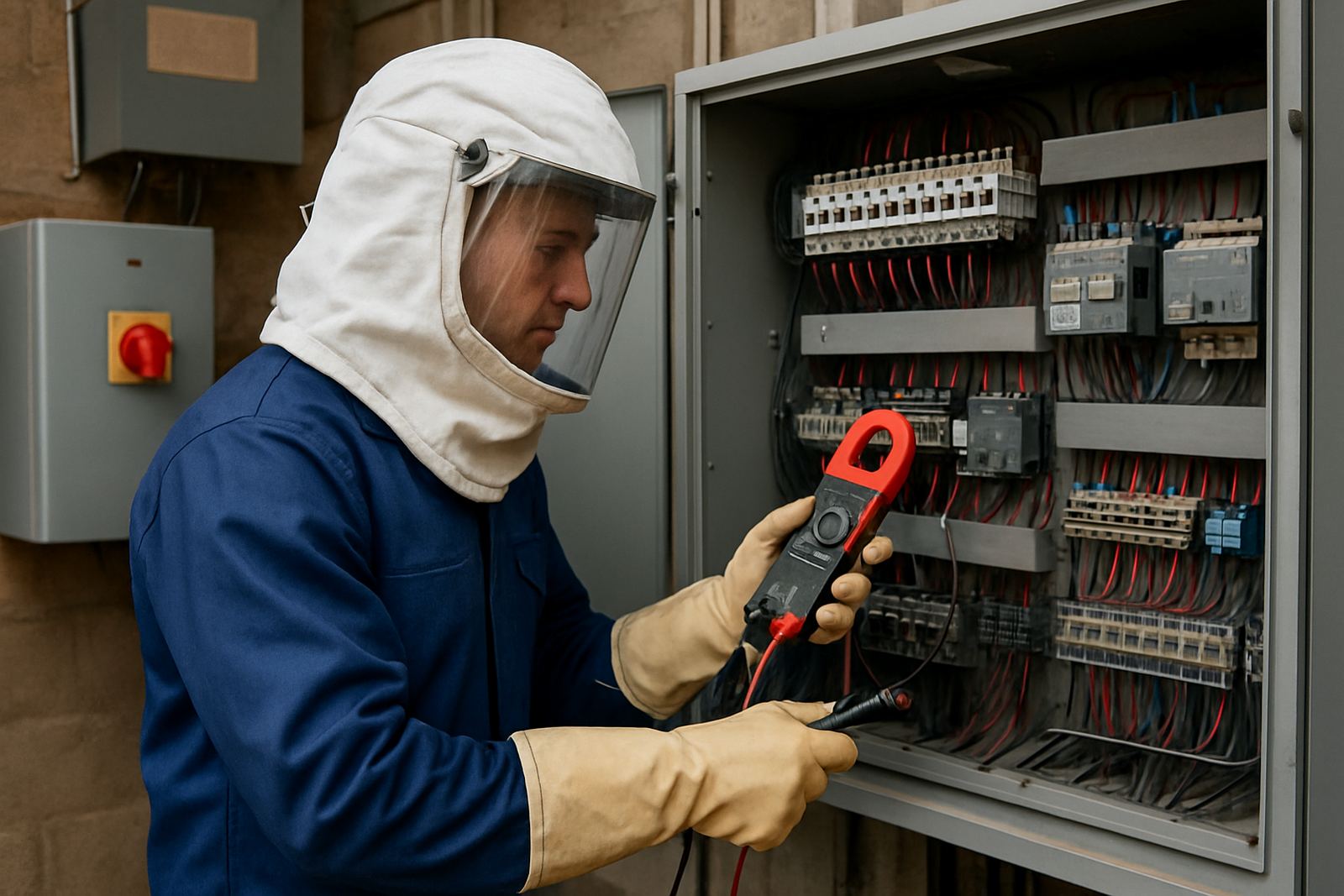
What Electrical Maintenance Teams Usually Need On Site
In factories, workshops, depots and plant rooms, the job is rarely just one test. A maintenance electrician may arrive to trace a nuisance trip, verify a live feed, confirm earth continuity, or check whether a panel is running too hot after a shift change. That is why the right set of metres and testers matters. You need equipment that reads consistently, survives daily use, and stays accurate when it is carried from Isando to Germiston, or from a site in Midrand to a warehouse in Boksburg.
For many teams, the daily kit includes multimeters, clamp metres, insulation testers, continuity testers, voltage detectors, socket testers, and temperature probes for motors, bearings and switchgear. In some sites, humidity readings also matter, especially in coastal storage rooms or areas with condensation from cold rooms and air conditioning. If the work involves quality sign-off or planned maintenance, calibration records become just as important as the reading itself.
- Troubleshooting after power interruptions or nuisance tripping
- Verification before equipment is returned to service
- Preventive checks on panels, motors, earthing and control circuits
- Routine inspections for compliance and internal audit records
Choosing The Right Instruments For The Task
Different maintenance tasks call for different levels of precision. A basic multimeter may be enough for general fault finding, but if the team is doing preventive work on production equipment, a higher grade instrument with stable ranges and true RMS measurement can make a real difference. Clamp metres are useful where current has to be measured without breaking the circuit, while insulation testers help confirm that cables and windings are holding up under stress. Temperature metres are often used on boards, drives, transformers and mechanical assemblies too.
Accu works with measuring instruments used by engineers, technicians and maintenance staff who need repeatable results. If the metre is dropped, stored in a hot van, or used in a dusty plant near Jet Park, accuracy can drift over time. That is where calibration comes in. A proper calibration interval depends on use, environment and internal policy, but in practice many teams in Johannesburg schedule annual checks and then shorten the interval for instruments used in harsh conditions. no one wants a metre that looks fine but is quietly giving off bad readings.
- Multimeters for voltage, resistance, continuity and diode checks
- Clamp metres for current measurement on live systems
- Insulation testers for cable and motor verification
- Thermometers and temperature probes for heat checks
- Voltage testers and socket testers for quick field checks
Calibration Support That Fits Maintenance Workflows
A maintenance department cannot afford long delays waiting for critical instruments. Accu’s calibration lab in Isando supports electrical tools that need verification before they go back into service, and courier collection is available nationwide. That helps when a site in Edenvale has a small batch to send in, or when a team in another province wants a standard turnaround without sending staff off the road. If your operation works around shifts or planned shutdowns, timing is as important as the measurement.
Good calibration practice also needs traceability. Instruments should come back with clear identification, stated results and a record that shows what was checked. That is especially useful for manufacturers, panel builders and facilities teams that must prove their checks during audits or customer inspections. A missed calibration can lead to false confidence, wasted fault-finding time, or unnecessary replacement of parts that were never faulty in the first place.
- Courier collection from Isando, Kempton Park and surrounding areas
- Support for single instruments and batch returns
- Records suitable for maintenance files and audit trails
- Turnaround planning around shutdowns and shift work
Planning A Practical Maintenance Layout
Electrical maintenance is easier when the layout of the tools matches the way the team actually works. Keep the everyday metres close to the workbench or tool issue point, but store the higher value instruments in a controlled cabinet when they are not in use. In humid environments, silica gel or dry storage helps protect sensitive electronics. In dusty workshops, sealed cases and regular cleaning can reduce wear. It is a simple habit, yet it saves a lot of replacement cost over time.
For a small site, one shared maintenance set may be enough. Larger plants often do better with a tiered setup: general issue metres for daily use, calibrated reference tools for sign-off, and specialist testers for scheduled work. Labelling matters too. If an instrument is due for calibration in 30 days, mark it clearly. If a metre is damaged, remove it from circulation straight away. A neat system avoids the common problem of a good instrument being mixed up with a failed one.
- Separate daily-use kits from verification instruments
- Store calibrated tools in labelled, dry cabinets
- Record issue dates and calibration due dates
- Keep batteries, leads and probes with the correct metre
Common Mistakes That Cost Time And Money
One of the biggest mistakes is treating all metres as interchangeable. A metre that is perfect for quick fault finding may not be ideal for scheduled verification work. Another common error is waiting until the last minute to send instruments for calibration. That leads to rushed decisions, borrowed equipment and gaps in the maintenance record. It also creates pressure during shutdown periods, when every hour off line has a cost.
Teams also sometimes overlook the condition of the accessories. A cracked test lead, worn probe tip or damaged clamp jaw can undermine the whole test, even if the main body of the instrument is still within spec. And in South African conditions, batteries are a frequent weak point. Heat in a vehicle, long storage, or leaving a metre flat for months can cause problems that look like instrument failure but are really just poor handling. It sounds simple, but these are the issues that show up again and again.
- Using uncalibrated metres for sign-off work
- Mixing damaged leads with serviceable instruments
- Leaving calibration too close to shutdown dates
- Ignoring storage conditions in hot or humid areas
Budget Ranges For Electrical Maintenance Instrumentation
Budget planning depends on how many instruments the team needs and how critical the measurements are. A small maintenance crew may start with a basic set of multimeters, voltage testers and a clamp metre, then add specialist tools as the workload grows. A larger operation with production equipment, multiple shifts or strict compliance checks will usually spend more because it needs better traceability, more frequent calibration and backup instruments for continuity.
As a general guide, entry level maintenance instruments might be budgeted from about R1 500 to R4 000 per item, while more specialised metres and testers can sit between R4 500 and R15 000 or more depending on the application. Calibration costs are usually planned separately and should be allowed for annually, especially where instruments are used daily or exposed to hard site conditions. If a team is trying to reduce downtime, it is often cheaper to maintain a proper rotation than to keep repairing avoidable faults.
For businesses in Johannesburg, Kempton Park, Edenvale, Germiston, Boksburg, Jet Park and Meadowdale, the most practical approach is to match the instrument set to the site risk and the maintenance schedule. That keeps spend focused where it matters and avoids buying equipment that never gets used.