
What a stroboscope does on a busy plant floor
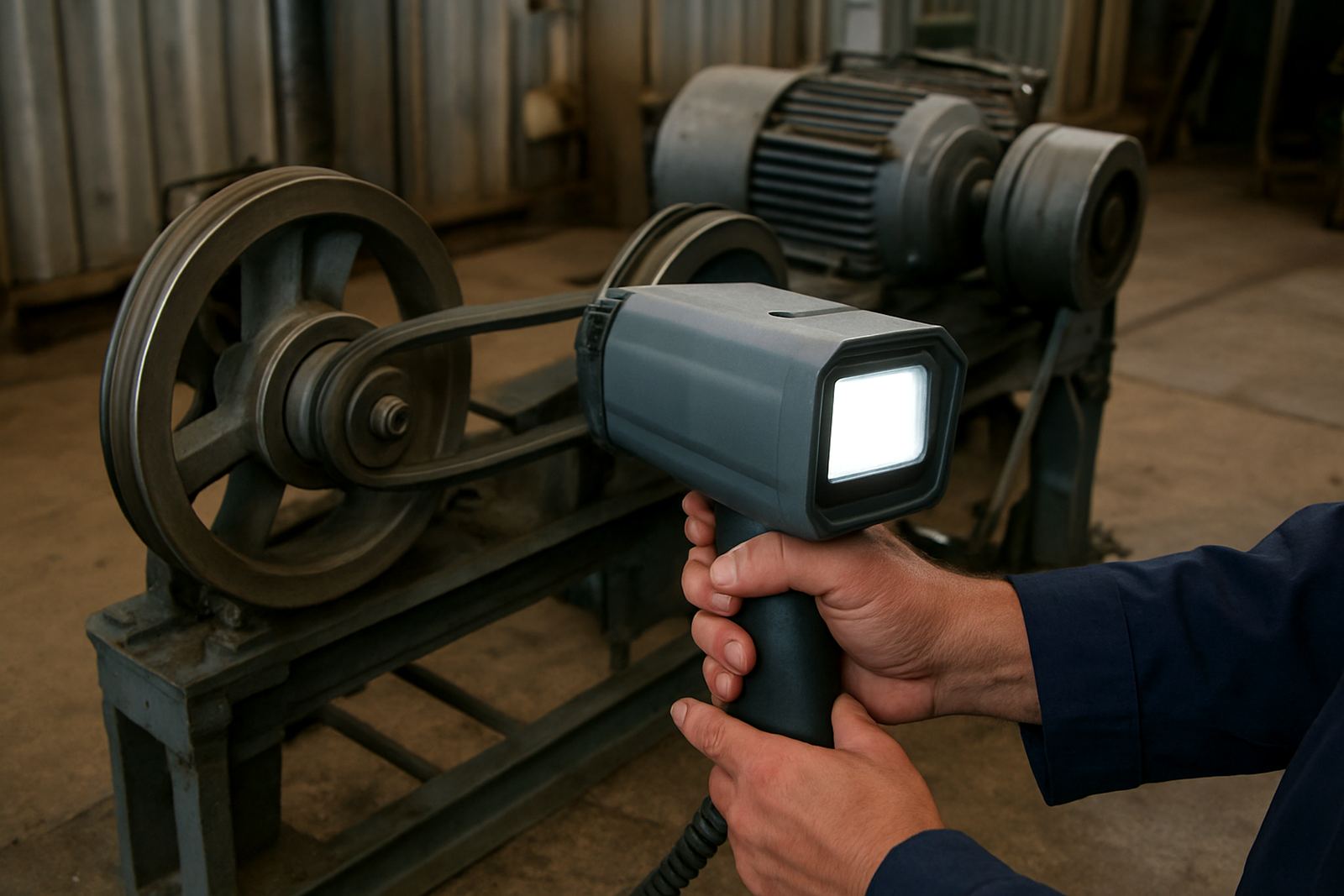
A stroboscope gives a series of timed flashes that make moving parts appear still when the flash rate matches the machine speed. That makes it useful for checking rotating shafts, gears, pulleys, print cylinders, mixers and conveyor product spacing without taking guards off for long or shutting the line down.
In Johannesburg, Boksburg and Germiston, this is especially useful where production runs around the clock and downtime costs money. A good unit helps with speed verification, vibration-related checks, and spotting slip, wobble or timing faults before they turn into bigger problems.
- Visual speed checks on rotating machinery
- Motion analysis on belts, rollers and conveyors
- Timing checks on repeat cycle equipment
- Inspection of wear marks, runout and product spacing
Common stroboscope types and size options
Stroboscopes are usually hand-held, with a light head and digital control panel in one compact unit. Some models are pistol-style for quick field use, while others are larger bench or wall mounted units for fixed inspection points. For maintenance teams moving between Isando, Edenvale and Midrand sites, a hand-held unit is often the easiest to carry and store.
When selecting a model, the main choice is between xenon flash units and LED flash units. LED models tend to run cooler, use less power and offer longer service life. Xenon units still suit some applications where a very bright flash is needed, but they may need more careful servicing over time.
- Hand-held portable units for field inspections
- Bench or fixed-mount units for repeat testing
- LED flash options for low heat and long service life
- Xenon flash options for high-intensity applications
Where stroboscopes work best in South African industry
These tools suit manufacturing, packaging, food handling, printing, plastics, mining support workshops and conveyor maintenance. They are also useful in electronics assembly where timing and repeat movement need to be checked without touching delicate equipment. In humid coastal conditions or dusty inland plants, the casing and lens quality matter because dirt and moisture can affect readability.
Accurate stroboscope readings help with preventative maintenance and quality control. If a conveyor is carrying cartons too close together, or a mixer shaft is running off speed, the problem can be seen quickly. That helps reduce rejects and keeps technicians focused on the real fault instead of guessing.
- Conveyor lines and packaging plants
- Printing and labelling equipment
- Fans, pumps, blowers and mixers
- Machine set-up and fault finding
Power needs, fitting and site conditions
Most stroboscopes are mains powered, rechargeable, or battery operated. Portable battery units are practical for workshops and service teams that move between sites in Kempton Park, Jet Park and Meadowdale. Mains powered versions suit fixed inspection stations where a steady supply is available.
Installation is usually simple, but the surrounding conditions matter. Bright ambient light can make the flash effect harder to see, so shaded inspection areas are preferred. On noisy plant floors, operators often use the unit in short bursts during routine checks. Standard stroboscopes run on rechargeable batteries, so keep a charged spare in the inspection kit for long rounds.
- Battery, rechargeable or mains powered models
- No gas supply required
- Works best in controlled light conditions
- Useful where short inspection windows are available
Care, cleaning and calibration planning
Keep the lens clean, check the housing for cracks and make sure the buttons and display respond properly. If the unit is used in a workshop with oil mist or fine dust, wipe it down after use and store it in a dry case. In coastal areas, light corrosion can show up on connectors and fittings if equipment is left open to damp air.
For dependable readings, the flash rate should be checked against a known reference from time to time. If the display drifts or the flash seems unstable, the unit may need calibration or repair. That is where proper servicing matters, because a stroboscope that reads slightly off can lead to bad speed settings and unnecessary machine stoppages.
- Clean lens and controls after use
- Store away from dust, oil and moisture
- Check flash consistency during servicing
- Arrange calibration if readings are critical to production
What to confirm before you order
Before placing an order, check the speed range you need, the flash type, battery life and whether the unit must be portable or fixed. If you work on fast conveyors or high speed rotating shafts, make sure the upper flash rate is high enough for your application. Also confirm whether you need a digital tachometer function, trigger input or external sensor support.
It helps to have the machine details ready, including operating speed, available power, the mounting space and the type of inspection you are doing. If the unit will be used by different teams across sites such as Germiston, Boksburg and Midrand, choose a model that is simple to set and easy to read in normal plant conditions.
- Required speed range in flashes per minute or RPM
- Portable or fixed mounting preference
- Battery or mains power requirement
- Need for tachometer readout or external triggering
Key facts
| Flash range | 50 to 12 000 flashes per minute, model dependent |
|---|---|
| Speed display | Digital RPM readout on selected models |
| Flash source | LED or xenon options |
| Power supply | Rechargeable battery, mains or both |
| Body style | Hand-held, bench or fixed-mount |
| Typical use | Rotating machinery, conveyors, fans and print lines |