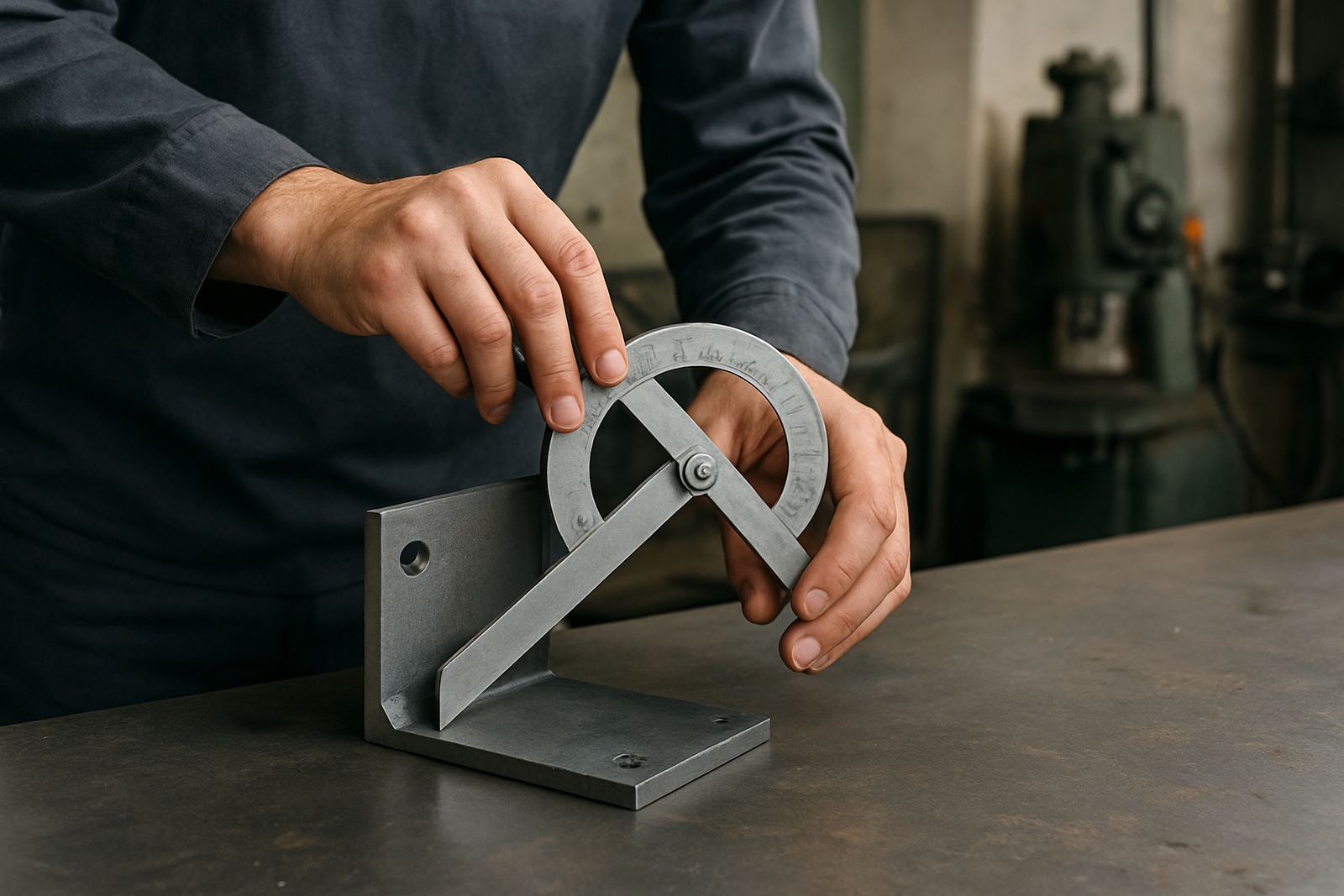
Angle setting for workshops that need repeatable readings
A bevel protractor is a precision angle-measuring instrument used to check internal and external angles on parts such as brackets, blades, jig plates, shafts and machined housings. It is common in engineering workshops, fabrication bays, toolrooms and maintenance departments where a quick angle check can save rework. The blade is adjustable and the main scale gives the base reading while the vernier or digital display gives the finer increment.
In South African production environments, this tool is often used on stainless steel, mild steel and aluminium parts. It suits work where the angle needs to be set before drilling, cutting, milling or welding. For teams in Johannesburg, Germiston, Boksburg and Jet Park, a bevel protractor is a practical choice when jobs move between bench work and machine setup during the same shift.
- Used for angle verification on fabricated and machined parts
- Suitable for quality checks, setup work and final inspection
- Useful where an angle must be transferred from drawing to component
Sizes and options available for different inspection tasks
Bevel protractors are generally supplied in standard sizes that cover everyday workshop use. Common blade lengths are 150 mm, 200 mm and 300 mm, with the 150 mm and 200 mm sizes being the most frequently used for general engineering work. Larger blades help when checking bigger parts or when the measuring face needs to reach further across a plate or assembly.
Options include vernier models for fine manual reading, digital models for faster readings, and sets with interchangeable blades. Some units have a locking mechanism to hold the selected angle in place. Where the work involves small components or inspection under bright lighting, a clear scale and smooth movement are important because glare can make reading difficult. In coastal humidity or dusty plant areas a solid build helps keep the movement consistent.
- Blade lengths typically 150 mm, 200 mm and 300 mm
- Manual vernier or digital reading options
- Locking screw or clamp for holding the set angle
- Interchangeable blade sets available on request
Where bevel protractors suit production and maintenance work
These instruments suit machine shops, sheet metal work, fabrication plants, maintenance teams and calibration departments. They are often used alongside calipers, micrometers and gauges when a job requires both dimensional and angular checks. In facilities around Isando, Kempton Park and Meadowdale, bevel protractors are often kept at the machine side for quick setup checks before a run starts.
They also suit maintenance teams working on conveyor guards, support frames, mounting plates and custom brackets. If a technician needs to confirm an angle before welding or after grinding, the tool gives a direct reading without needing power or gas. That makes it valuable for onsite measurement tasks where bench testing must still continue, even when working away from the main workshop area.
- Fabrication shops and machine shops
- Maintenance and repair teams
- Toolrooms and inspection bays
- Field service work with no mains power required
Setup, handling and working conditions
A bevel protractor needs no installation, power supply or gas connection. It is ready for use once the blade and measuring faces are clean. For accurate results, the contact surfaces should be free from burrs, swarf, oil and heavy dust. On site, a clean rag and a safe storage case go a long way toward keeping the tool in good condition.
Temperature changes can affect some readings, especially where the part and the tool have been moved between a hot workshop and a cooler inspection room. Give the instrument time to stabilise before final measurement. If the work area is near grinding, keep the protractor clear of sparks and abrasive dust. The blade should move smoothly without side play, and the locking action should hold firm without forcing it.
There are no municipal or utility requirements for use, but standard workshop safety rules still apply. Keep fingers clear of sharp edges on fabricated parts and do not use the tool as a clamp or lever.
Calibration and servicing that keep readings dependable
Accu provides calibration services from our calibration lab in Isando, Kempton Park, with courier collection available nationwide. That is useful for businesses that need traceable records for internal audits, customer requirements or ISO-related checks. A bevel protractor should be checked if the blade has been dropped, if the scale is hard to read, or if it is used daily in a busy workshop.
Routine care includes wiping the tool after use, storing it flat in a protective case and avoiding contact with cutting fluids that can leave residue. If the instrument is digital, keep spare batteries available and remove them during long storage periods. In humid environments like some coastal receiving areas, it helps to store the tool with light rust protection if the manufacturer allows it.
When a unit is sent in for service, include any known fault such as stiff movement, uncertain zero position or a damaged locking screw. That information helps the calibration technician focus the inspection faster, which is useful when turnaround time matters.
What to confirm before you order
Before placing an order, check the blade length, reading style and the angle range you need for the job. It is also worth confirming whether you want a vernier model or a digital model, and whether a locking screw or interchangeable blade set is required. If the instrument will be used for production sign-off, ask for calibration support at the same time so the tool is ready for use on arrival.
Also check the application itself. A short blade can be ideal for small parts but may not reach across larger plates or frames. If the component is awkwardly shaped, a longer blade or a set with accessory blades can save time on the shop floor. Our team can help match the tool to the task, whether it is for a workshop in Midrand, a plant in Edenvale or a maintenance crew moving between sites.
- Required blade length and angle range
- Vernier or digital reading preference
- Need for a locking screw or blade extensions
- Calibration certificate or service support required
Key facts
| Product type | Bevel protractor for angle measurement and setting |
|---|---|
| Common sizes | 150 mm, 200 mm and 300 mm blade lengths |
| Reading styles | Vernier or digital depending on model |
| Use environments | Fabrication, machining, inspection and maintenance |
| Power or gas needs | None required |
| Service support | Calibration, checking and courier collection nationwide |